A trailer can have the right tonnage rating and still be the wrong trailer for the job.
That is the problem with treating axle configuration like a minor spec detail. Axle count, spacing, flip axle prep, and related options affect how weight is distributed, which routes the trailer can run, what permits may be required, and which loads a buyer can accept.
Two trailers may look similar on paper, but perform very differently once they are loaded and routed. That is why axle setup should be discussed before price. A lower price can come with limits the buyer does not see until the trailer is loaded, routed, and put to work.
Why Axle Configuration Matters
A heavy-duty trailer does more than carry weight. It has to distribute weight across the trailer, truck, and road in a way that supports the load and keeps the haul legal.
Axle setup can affect:
-
-
-
Legal weight limits.
-
Bridge-law compliance.
-
Route flexibility.
-
Permit options.
-
Payload capacity.
-
Load stability.
-
Future trailer flexibility.
-
Resale value.
-
-
The right setup depends on the buyer’s loads, routes, and growth plans. An axle configuration that works for one operation may create limits for another.

Common Axle Setup Considerations
There is no universal best axle configuration. Each option has a place depending on the buyer’s hauling needs:
-
-
-
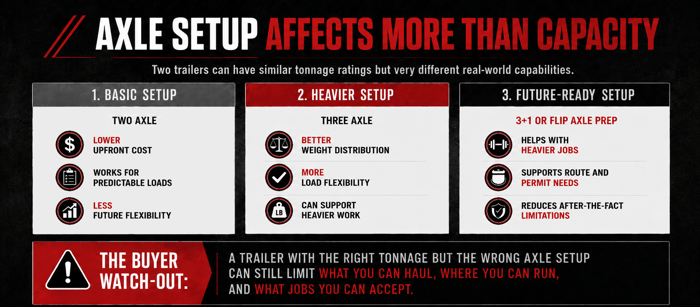
Two-axle setups may work for lighter or more predictable hauling needs. They can be practical when the buyer does not need added axle capacity, but they may limit future load opportunities.
-
Three-axle setups add capacity and flexibility for heavier equipment. For many buyers, a third axle is not just about more weight. It can also affect load distribution, permitting, and route eligibility.
-
3+1 configurations give buyers another axle position behind the main group. This may help with heavier loads or specific routing requirements, depending on the states involved.
-
Flip axle prep is worth discussing even when the buyer does not need a flip axle immediately. Skipping prep may save money up front, but it can limit future flexibility or make later changes more expensive.
-
Spreader bars help create additional axle spacing, which can matter for bridge-law requirements and weight distribution.
-
-
Buyers should also ask about compatibility. Flip axles, spreader bars, and related components may not be interchangeable across brands or builds.
Legal and Route Considerations
Axle configuration depends heavily on where the trailer will run.
Bridge laws, axle spacing rules, permitting requirements, and how each state recognizes the axle setup can vary. A setup that works for local hauling may not be enough for multi-state work or heavier permitted loads.
Before quoting a trailer, buyers should think through:
-
-
-
Which states they run now.
-
Which states they may add later.
-
Whether permits are common.
-
Whether bridge laws affect their work.
-
Whether axle spacing will influence approval.
-
Whether the trailer needs regional or multi-state flexibility.
-
-
The load matters, but the route matters just as much.
How Axle Setup Affects Load Opportunities
The wrong axle setup can make a trailer less useful than it looks on paper.
A buyer may save money with a simpler configuration, then lose work because the trailer cannot handle certain loads legally, efficiently, or profitably. That can lead to workarounds, missed jobs, or expensive upgrades after the trailer is already in service.
This is where price-only comparisons become risky. One trailer may cost more because it includes the axle layout, spacing, prep, or flexibility the buyer needs. Another may cost less because it leaves those capabilities out.
The goal is not to buy the most axles possible. The goal is to buy the axle setup that matches the work.
.
Why Axle Configuration Should Come Before Price
A quote is only useful if the spec is right.
Before comparing prices, buyers should understand how the axle setup affects the trailer’s intended use. Two trailers with similar advertised capacity may differ in:
-
-
-
Axle count
-
Axle spacing
-
Flip axle prep
-
Spreader bar options
-
Load distribution
-
Legal flexibility
-
Future expansion
-
Component compatibility
-
-
Those details can affect revenue, uptime, resale value, and the buyer’s ability to accept better loads.
Questions to Ask Before Requesting a Quote
Before requesting a trailer quote, buyers should be ready to answer practical questions about their work:
Load questions:
-
-
-
-
What is the typical load weight?
-
What is the heaviest load expected?
-
Are the loads evenly distributed or concentrated?
-
What equipment will be hauled most often?
-
Is the trailer being bought for one job or a range of future work?
-
-
-
Route questions:
-
-
-
-
What states will the trailer run in?
-
Are bridge laws a regular concern?
-
Will axle spacing affect permits?
-
Will the trailer run locally, regionally, or across multiple states?
-
-
-
Future-use questions:
-
-
-
-
Is flip axle prep needed?
-
Is a 3+1 setup needed now or later?
-
Should the trailer be spec’d for today’s work or tomorrow’s?
-
How will the axle setup affect resale or trade-in value?
-
-
-
A good trailer quote should reflect a buyer’s real operating conditions, not just a requested tonnage and price range.
Talk Through the Axle Setup Before You Buy
The right axle setup helps buyers avoid legal, operational, and financial limitations after the trailer is already in service. HD Trailers can help buyers compare axle configuration, route needs, load requirements, and future flexibility before requesting a quote.
Before buying on price alone, we welcome you to talk though axle setup with our team and make sure the trailer is built for the work it needs to handle.