 HD Trailers Team
T1 Steel vs. Standard Steel: What Buyers Should Know
 HD Trailers Team : Jul 21, 2026
A trailer’s true strength is not always visible from twenty feet away. Steel choice, frame design, and reinforcement can make all the difference...

Purchasing a Heavy Haul Trailer is a significant investment, but comparing trailers isn't as simple as choosing the highest capacity or the lowest price. Two trailers with the same weight rating can perform very differently depending on their design, configuration, and intended application.
Imagine you're comparing two 55-ton Hydraulic Detachable Gooseneck (HDG/RGN) trailers. On paper, both appear capable of hauling the same equipment. However, one features a lower loaded deck height, a longer well, air ride suspension, and flip axle compatibility, while the other has a higher deck, shorter well, and spring suspension. Those differences can affect everything from permitting and loading efficiency to the types of equipment your fleet can transport.
Understanding which specifications matter, and why, can help you invest in a trailer that supports your operation today while giving your business room to grow.
At HD Trailers, we help commercial carriers, construction companies, heavy-haul operators, and specialized transport fleets compare new and used trailers based on real-world hauling requirements, not just published specifications.
Capacity is often the first specification buyers compare, but it should never be the only one.
Heavy-haul trailers are available in capacities ranging from 25 tons to more than 100 tons, and selecting the right rating depends on the equipment you transport most frequently.
For example, a contractor hauling a 45-ton excavator may determine that a 55-ton trailer provides the flexibility to accommodate attachments and future equipment purchases without immediately stepping into a much larger trailer.
Instead of simply asking, "What's the highest capacity available?", ask:
The goal is to purchase enough trailer, not necessarily the biggest trailer.
Loaded deck height is one of the most overlooked specifications in heavy-haul transportation.
A lower deck height helps operators transport taller equipment while staying within legal height restrictions. It also lowers the center of gravity, improving stability during transport.
Returning to our 55-ton RGN example, one trailer may have a lower loaded deck than another, allowing the same excavator to travel without additional routing or permitting considerations.
For fleets that regularly transport large excavators, cranes, or industrial equipment, even a few inches can make a meaningful difference.
The trailer's well length determines how equipment fits on the deck and how weight is distributed across the trailer.
If the well is too short, larger equipment may not be positioned correctly, potentially affecting axle loading and balance.
For example, a contractor transporting long-wheelbase excavators may benefit from a longer well that provides greater flexibility when positioning the machine.
When comparing trailers, ask yourself:
Buying a trailer with a well designed for your long-term needs often prevents costly upgrades later.
Neck design affects loading efficiency, maintenance requirements, and the types of equipment your fleet can transport.
Hydraulic detachable gooseneck trailers allow equipment to drive directly onto the trailer from the front.
They're often the preferred choice for fleets transporting:
Their lower loaded deck height and efficient loading process make them one of the most versatile heavy-haul trailer configurations.
Mechanical gooseneck trailers offer similar loading advantages while utilizing a mechanical disconnect system.
Many operators appreciate their dependable design and simpler mechanical operation.
The right choice depends on how frequently you load equipment, the types of machinery you transport, and your operational preferences.
%20-%202026-07-09T132004.705.png?width=1280&height=720&name=Featured%20Image%20Size%20(1280%20x%20720%20px)%20-%202026-07-09T132004.705.png) Compare Axle Configurations
Compare Axle ConfigurationsMore axles don't automatically mean a better trailer.
Instead, axle configuration should match your hauling requirements.
A tandem configuration may be appropriate for lighter heavy-haul applications, while triaxle or quad-axle configurations often provide better weight distribution for larger equipment.
If your business regularly transports exceptionally heavy loads, compatibility with flip axles or jeep dollies can significantly increase operational flexibility.
Rather than focusing on axle count alone, evaluate how the trailer supports the loads your fleet actually transports.
Suspension affects both trailer durability and how equipment rides during transport.
Air ride suspension helps reduce vibration and road shock, making it an excellent choice for transporting sensitive or high-value equipment over long distances.
Operations hauling transformers, fabricated industrial equipment, or precision machinery often prioritize air ride systems.
Walking beam suspension is known for durability in demanding environments.
Construction contractors operating on rough jobsites frequently choose walking beam systems because they perform well on uneven terrain while requiring minimal maintenance.
Neither option is universally better, they simply serve different applications.
Deck dimensions influence far more than overall trailer size.
Important specifications include:
A wider deck may improve loading flexibility, while greater swing clearance can help operators navigate tighter job sites.
These details often become more important as equipment sizes increase.
If you're purchasing a Hydraulic Detachable Gooseneck, don't overlook the trailer's hydraulic power system.
Buyers should compare factors such as:
For fleets loading equipment daily, dependable hydraulic performance directly impacts productivity.
Whether purchasing new or used, evaluating condition is just as important as comparing specifications.
When inspecting a used heavy-haul trailer, pay close attention to:
A well-maintained used trailer can provide outstanding value while helping fleets expand without the lead times often associated with new equipment.
Before purchasing any heavy-haul trailer, consider asking:
These questions often reveal more than a simple specification sheet.
Comparing trailer specifications is only part of the buying process.
HD Trailers provides commercial buyers with access to a nationwide marketplace of new and used heavy-haul trailers from leading manufacturers, including Alpha HD, Kalyn Siebert, XL Specialized, and Fontaine.
Beyond inventory, HD Trailers offers:
Our experienced team works with commercial operators every day to help identify trailer configurations that align with real-world hauling requirements.
Returning to our example of the two 55-ton RGNs, the decision ultimately isn't about which trailer lists more features on paper. It's about which one fits your equipment, your routes, and your long-term business goals.
A lower loaded deck height may simplify permitting. A longer well may improve weight distribution for larger excavators. Air ride suspension may better protect sensitive equipment, while flip axle compatibility may provide flexibility as your hauling requirements evolve.
The best heavy-haul trailer isn't simply the one with the biggest capacity, it's the one engineered for the work your business performs every day.
If you're ready to compare heavy-haul trailer specifications, browse HD Trailers' live inventory, explore financing options, or speak with one of our heavy-haul specialists.
Call: 888-380-2509
Email: sales@HDtrailers.com
Browse Inventory: https://www.hdtrailers.com
 HD Trailers Team : Jul 21, 2026
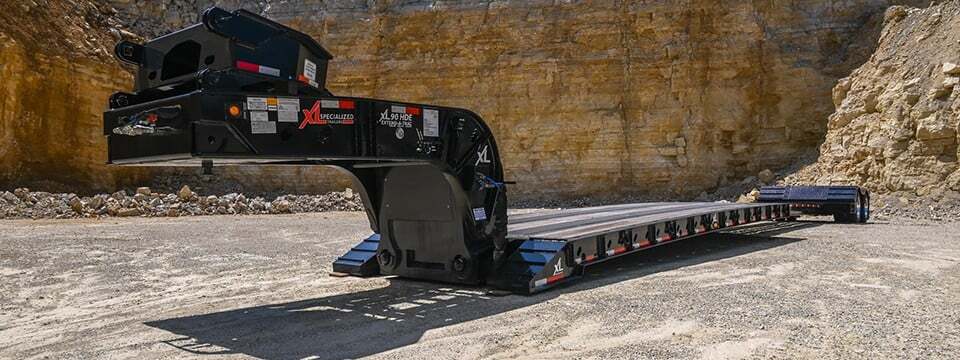
A trailer’s true strength is not always visible from twenty feet away. Steel choice, frame design, and reinforcement can make all the difference...
 HD Trailers Team : Aug 04, 2026
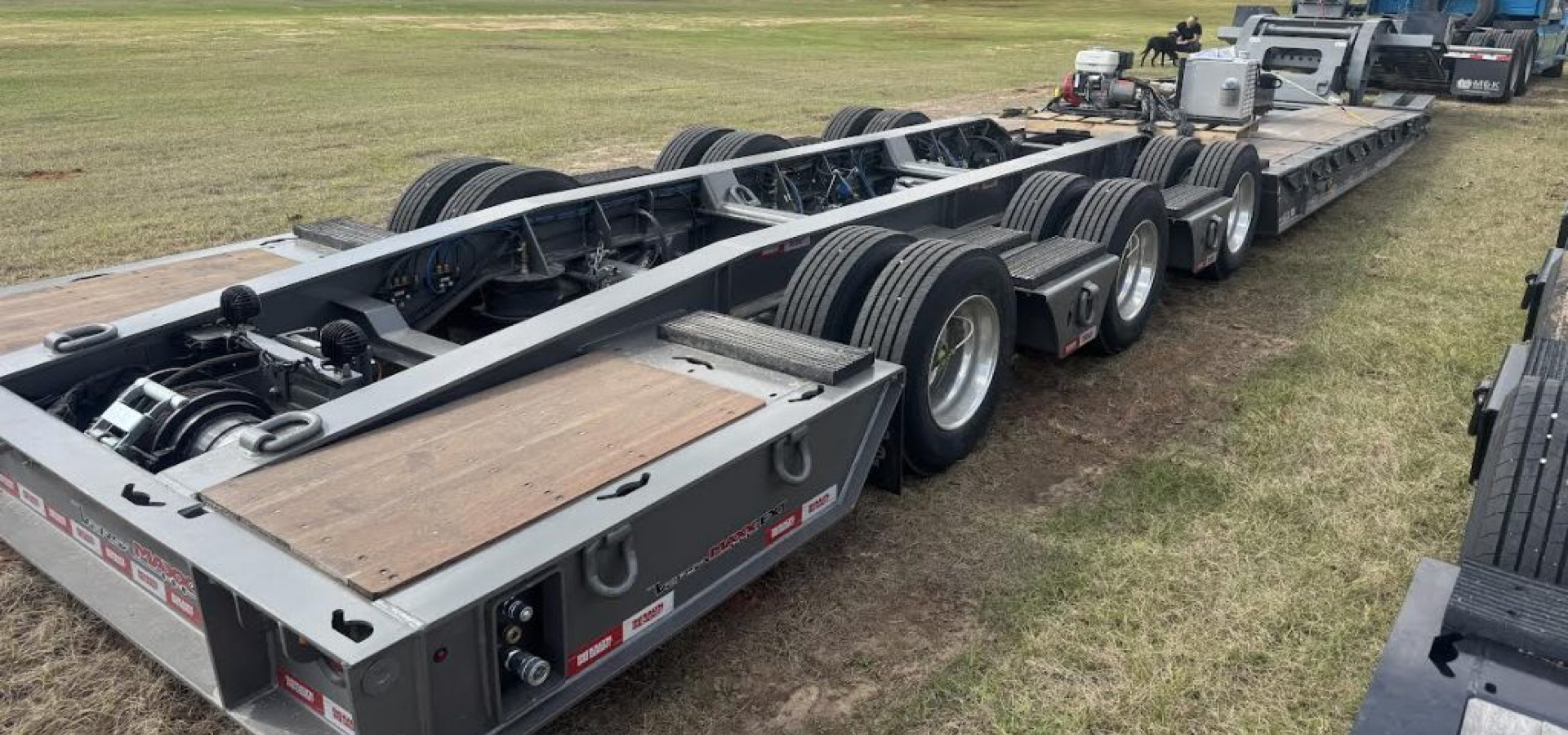
A trailer’s tonnage rating only tells part of the story; the right axle setup can impact legal weight, permits, routes, load flexibility, and the...
 HD Trailers Team : May 26, 2026
The right work trailer is not just the one that handles today's load, but the one that keeps your operation eligible for better work tomorrow.
 HD Trailers Team : Sep 24, 2026
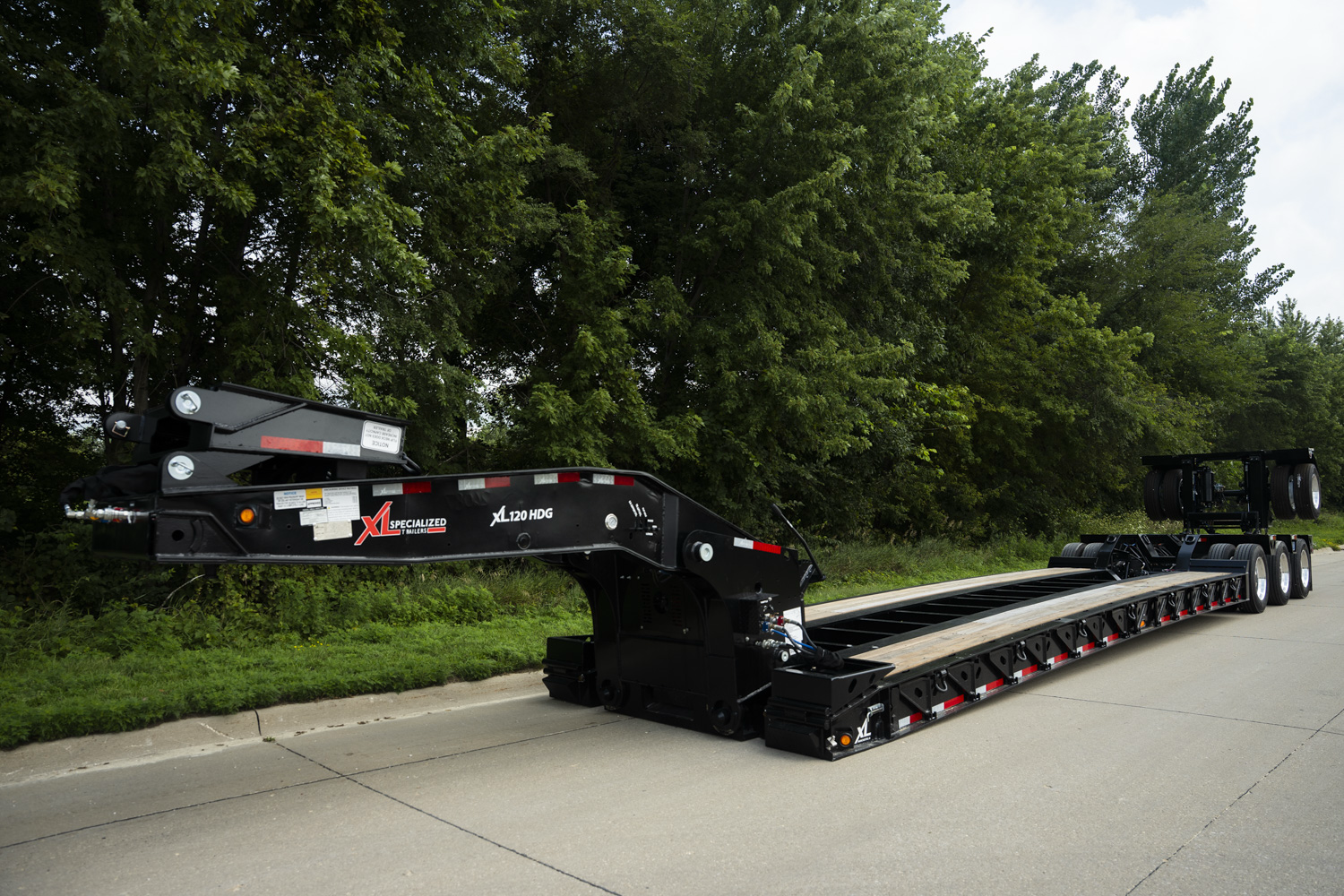
Stock or custom heavy-haul trailer? Learn how load dimensions, deck height, axle setup, routes, and future work determine the right configuration.