HD Trailers Team
A used heavy-duty trailer can save real money, get you working sooner, and let you add hauling capacity without waiting on a new build. For most buyers, that advantage holds up, and a used trailer really can be the better deal.
The buyers who capture that value are the ones who look past the asking price and confirm a few key things: whether the trailer fits the work, what equipment is included, what history it carries, and how it will hold its value down the road.
None of that takes the deal away from you. It's how you make sure the deal is as good as it looks, and it usually is.
The best used-trailer purchases start with a clear picture of the job. Knowing what you need makes it far easier to recognize the right trailer when you find it. Before comparing options, ask:
- What equipment will it carry?
- How much does it weigh?
- Where is that weight concentrated?
- What deck height is needed to stay within loaded-height limits?
- How long does the deck need to be?
- Which states and routes will the trailer operate in?
With those answers in hand, a strong match is easy to spot. Deck height, deck length, and axle configuration all work together to tell you whether a trailer is a great fit for your loads and routes, and plenty of used trailers on the market are.
Know Exactly What You're Buying
Capacity is one of the easiest things to confirm, and confirming it is what turns a good-looking listing into a confident purchase.
Two trailers can both be labeled as 55-ton units while differing in deck height, empty weight, deck length, axle configuration, and concentrated-load capacity. Knowing those details upfront means you know precisely what you're getting, with no guesswork required.
Whenever possible, review the manufacturer's data plate and original specifications. Confirm:
- Manufacturer, model, year, and VIN
- Distributed capacity
- Concentrated-load rating
- Empty trailer weight
- Deck height and ground clearance
- Deck length and width
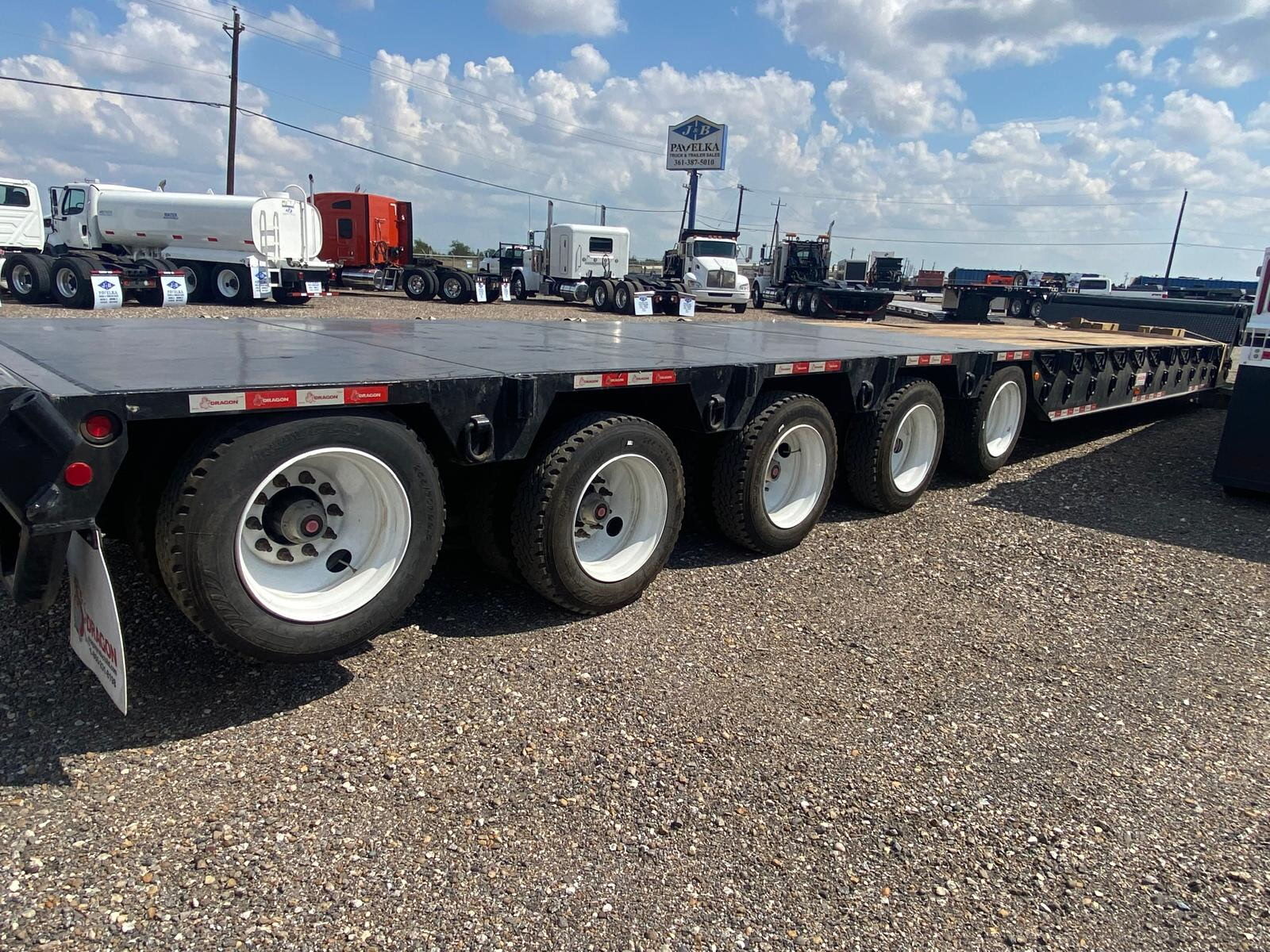
- Axle count, spacing, and ratings
- Suspension type
- Hydraulic equipment and controls
- Included options and accessories
A quick review of the data plate alongside the listing is usually all it takes to confirm a trailer is ready for the loads you have in mind, including how that weight is distributed across the deck.
Get the Full Package
Used trailers often come with more than the deck and axles. Outriggers, ramps, flip axles, booster assemblies, winches, wireless remotes, hydraulic power units, and chains frequently come along with the sale. A quick checklist confirms you're getting everything you're paying for:
- Outriggers
- Ramps
- Flip axles
- Booster assemblies
- Winches
- Wireless remotes
- Hydraulic power units
- Chains
- Any other removable components
Confirming this list upfront means the price you agreed to is the value you actually receive.
If you're planning to bring over equipment from another trailer, it's worth checking compatibility first. Flip axles and other manufacturer-specific components are often designed to work best with their original brand. A quick compatibility check now can save a replacement cost later.
Let the History Work in Your Favor
A used trailer's history is one of its biggest assets. How it was operated and maintained tells you a lot about what to expect going forward, and a well-documented trailer is often a great sign.
Ask what it hauled, how often it was used, and whether it regularly worked near its maximum capacity. Maintenance records, inspection reports, repair invoices, and parts-replacement history all help paint a clear, reassuring picture when they're available.
A repair on the record is not a red flag. Heavy-duty equipment is built to be repaired throughout its service life. A trailer with documented axle work, hydraulic service, or structural repairs done correctly, by qualified people, following manufacturer or engineering guidance, can be just as strong a choice as one with a lighter file.
Do the Math: It Usually Works in Your Favor
The asking price is just the starting point, and a little quick math upfront confirms whether the full picture still favors the used trailer, which it usually does. Before making an offer, estimate what the trailer will need before entering regular service:
- Tires and brakes
- Suspension components
- Hydraulic hoses or cylinders
- Decking
- Electrical repairs
- Welding or structural work
- Paint and corrosion treatment
- Missing ramps, outriggers, or axle components
It's also worth factoring in how quickly the trailer can be turned around and put to work, since a fast path to service adds to the value of the deal.
The clearest comparison isn't simply used price versus new price. It's the total cost of getting the trailer ready and earning, set against everything a new build would cost and how long it would take to arrive. For a well-chosen used trailer, that comparison usually comes out ahead.
Protect Your Investment Long-Term
A trailer that's easy to support and easy to resell keeps paying off well after the purchase. Parts availability, manufacturer support, and warranty terms are worth a quick check so you know your investment is built to last.
Confirm whether the manufacturer still supports the model and whether replacement parts are easy to source. Check what warranty coverage, if any, carries over.
Resale is part of the value, too. Recognized manufacturers, common configurations, accessible parts, and strong dealer support all make a trailer easier to trade or sell down the road. Choosing a well-supported model now sets you up for a strong position later, even if a less common configuration might mean a smaller pool of future buyers.
A Used Trailer Can Be the Smart Deal
Used heavy-duty trailers save money, get to work faster, and let a growing fleet add capacity without the wait or expense of a new build. That advantage is real — and for most buyers, it holds up.
The buyers who capture that value are the ones who verify the specs, confirm what's included, understand the trailer's history, and price in the cost of getting it road-ready. That's not extra work standing between you and a good deal — it's how you know the deal is actually good.
A used trailer doesn't need to be perfect. It needs to be properly configured, well-documented, and capable of producing enough value to justify the investment. Do that homework, and a used trailer isn't just a cheaper option — it's often the smarter one.
Ready to find the right trailer? Talk with the HD Trailers team. We've helped buyers evaluate hundreds of used heavy-duty trailers, and we know how to spot the ones that are ready to earn from day one. Let's find your next trailer together.