 HD Trailers Team
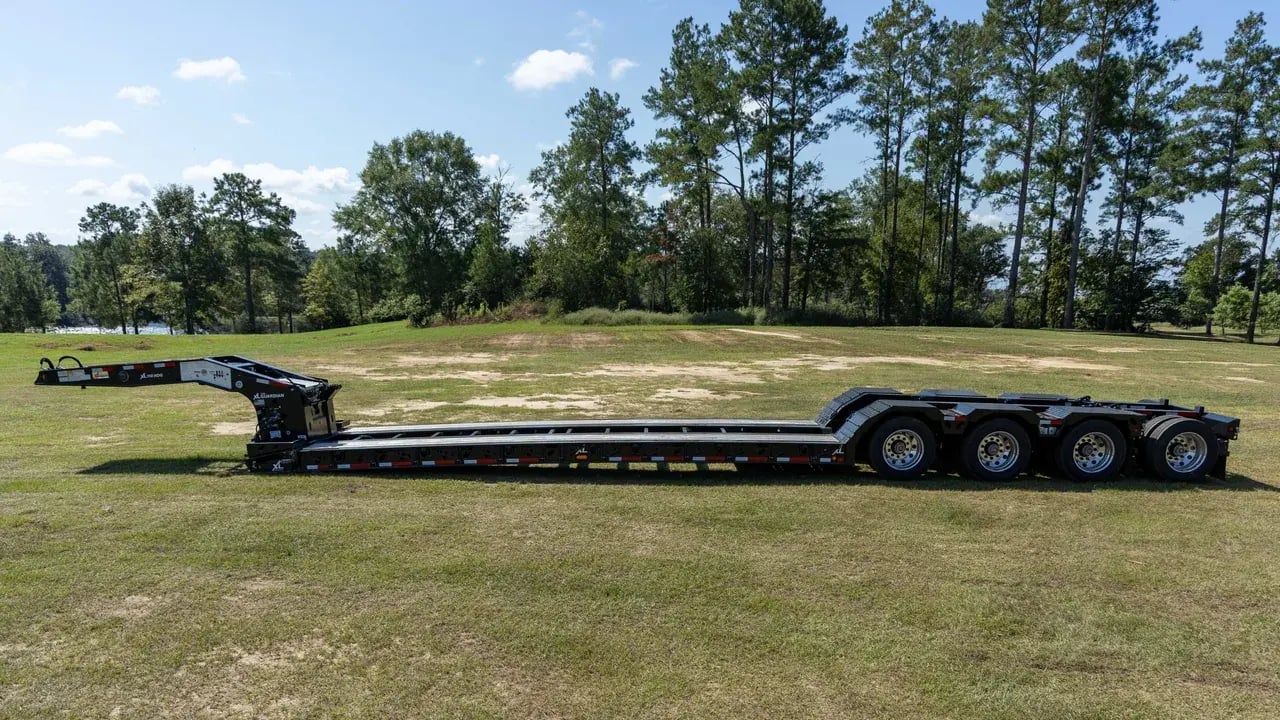
There is no single best lowboy manufacturer. The right choice depends on the loads you haul, your axle configuration needs, and the deck height and neck style your work demands. Established trailer manufacturers like Talbert, Trail King, Fontaine, XL Specialized, Kalyn Siebert and Alpha HD all build serious heavy haul trailers, but they make different design choices. That matters more than the name on the gooseneck.
Brand debates come up at every truck stop and job site. Some of that talk is useful. A lot of it is outdated or oversimplified. Below, we walk through the most common myths about comparing lowboy trailer brands and what actually holds up when you are spending real money on equipment that has to move excavators, dozers, cranes and transformers day after day.
If you are newer to the category, start with our complete beginner's guide to lowboy trailers, then come back here.
Myth: One of the Big Trailer Manufacturers Is Simply the Best
Everyone has a favorite. Maybe your first boss ran Talbert. Maybe your fleet has always bought Trail King or Fontaine. That loyalty usually comes from real experience, and it is worth listening to. But "best" only means something once you attach it to a job.
A contractor moving a mid-size excavator between local sites has different needs than a specialized carrier hauling a 100-ton transformer across three states. One operator might prioritize a low loaded deck height for tall loads. Another might care most about how quickly the neck detaches for front loading. Another might need a trailer that accepts a jeep dolly, flip axle or booster to spread weight for permits.
Reputable heavy haul builders tend to compete on design philosophy, options and build quality, not on one being universally superior. The honest answer to "who makes the best lowboy?" is: the one whose spec sheet matches your loads.
Myth: A Higher Ton Rating Always Means a Better Lowboy
It is tempting to think a 60-ton trailer beats a 50-ton trailer, and a 100-ton trailer beats both. More capacity sounds like more value. In practice, buying far more capacity than you use can cost you.
Heavier-rated trailers generally carry more structural steel and often more axles. That can mean more tare weight, which eats into your legal payload on loads that do not need the extra rating. It can also mean higher purchase cost, more tires and brakes to maintain, and permit considerations tied to axle spacing and overall length.
Capacity ratings also depend on how the load is placed. A trailer's rated capacity typically assumes the weight is distributed in a specific way, often concentrated over a certain length of the well. Point loads, like a heavy component sitting on a short footprint, change the picture. For a deeper look, see our breakdown of how much weight a lowboy trailer can carry.
Federal law sets a maximum gross vehicle weight of 80,000 pounds on the Interstate System, and loads beyond federal size and weight limits generally require state-issued oversize/overweight permits. (Source: Federal Highway Administration, Size and Weight)
That is why axle configuration and weight distribution matter as much as the headline ton rating. A well-spec'd trailer helps you stay legal and permit-friendly, not just strong.
Myth: All Trailer Manufacturers Build an RGN the Same Way
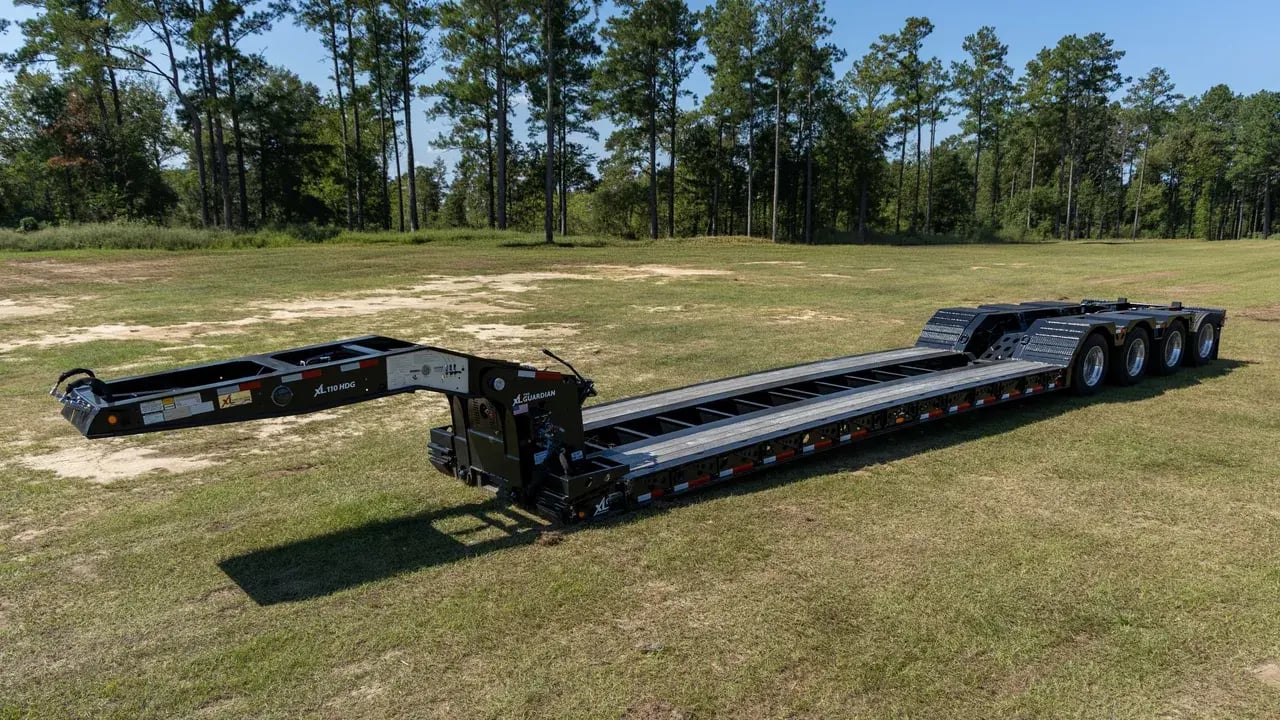
On paper, two 55-ton RGN trailers from different builders can look nearly identical. Same general deck length, similar axle count, close capacity rating. Look closer and the differences show up fast.
Manufacturers make different calls on:
- Loaded deck height and ground clearance. A small difference in deck height can decide whether a tall load needs a height permit or a route change.
- Neck design. How the gooseneck detaches, how much ride height adjustment you get, and how long the process takes.
- Well length and width options. Including outriggers, extendable decks and swing-out options for wide loads.
- Suspension. Air ride versus other setups, and how that affects ride quality and ground clearance.
- Add-on compatibility. Flip axles, jeep dollies, boosters and deck inserts vary by builder and model.
The fastest way to see these differences is side by side. Our heavy-duty trailer comparison chart for lowboys, RGNs, sliding axles and extendables lays out how the main configurations stack up.
Myth: A Hydraulic Detachable Gooseneck Always Beats Every Other Neck Style
The hydraulic detachable gooseneck (RGN/HDG) is the workhorse of the heavy haul world for good reason. Front loading is fast, and the hydraulic neck makes detaching simpler for a single operator. For many contractors and carriers, it is the right call.
But it is not automatically the right call for everyone. Mechanical detachable goosenecks (MRG) have fewer hydraulic components, which some operators prefer for simplicity and maintenance. Fixed-neck lowboys and mini decks can suit operations that load from the rear, haul the same type of machine repeatedly, or want to keep weight and complexity down. Folding gooseneck designs offer their own tradeoffs.
| Neck Style | How It Loads | Often a Fit For |
|---|---|---|
| Hydraulic Detachable Gooseneck (RGN/HDG) | Front load after hydraulic neck detaches | Varied loads, frequent loading, single-operator efficiency |
| Mechanical Detachable Gooseneck (MRG) | Front load, neck detaches using the truck | Operators who want fewer hydraulic components |
| Fixed Neck Lowboy / Mini Deck | Rear load, typically over ramps | Repeat loads of similar machines, simpler operation |
Most major trailer manufacturers offer several of these styles. The question is less about which brand and more about which configuration matches how and where you load.
Myth: A Top Brand Name Means Any Used Lowboy Is a Safe Bet
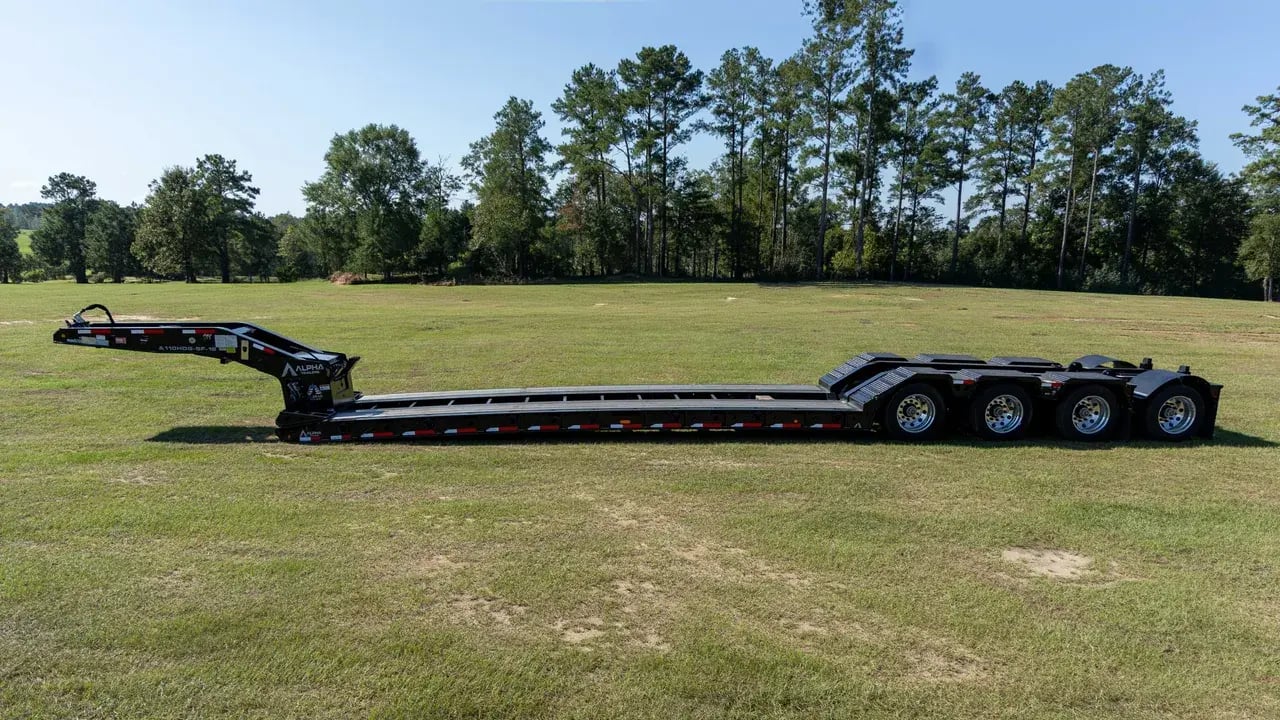
A respected name like Talbert, Trail King, Fontaine or XL Specialized carries weight in the used market, and it should. Quality builders tend to make trailers that hold up. But a brand name does not erase years of hard use, overloading, poor maintenance or rough repairs.
When you look at a used lowboy trailer for sale, the trailer's actual history matters more than its badge. Check the main beams for cracks or signs of stress, look at weld repairs, inspect the deck surface, and review the condition of the suspension, tires, brakes and, on an RGN, the hydraulic system and neck components. Ask for any maintenance records the seller has.
The flip side is also true. A well-maintained trailer from a builder you are less familiar with can be a smart buy. Judge the trailer in front of you, not the reputation alone.
Myth: You Have to Go Fully Custom to Get the Right Lowboy
Many heavy haul trailer manufacturers will build to order, and custom builds have their place, especially for specialized loads like wind components or oversized industrial equipment. But custom is not always necessary, and it often comes with longer wait times.
Plenty of operators find a stock or lightly optioned trailer that fits 90 percent of their work, then handle the rest with add-ons like a flip axle, jeep dolly or deck insert. We cover the tradeoffs in detail in stock trailer or custom build: how to choose the right heavy-haul trailer.
Common Questions About Lowboy Trailer Manufacturers
Who are the main lowboy trailer manufacturers?
Well-known heavy haul builders include Talbert, Trail King, Fontaine, XL Specialized, Kalyn Siebert and Alpha HD, among others. Each offers lowboy and RGN trailers in a range of capacities and configurations. You can see the builders we work with on our brands page.
Is an RGN trailer the same as a lowboy trailer?
An RGN, or removable gooseneck, is a type of lowboy. "Lowboy" (or low boy) describes the low deck design, while RGN describes a neck that detaches for front loading. Fixed-neck lowboys and mini decks are also lowboys, they just load differently.
Should I buy a new or used lowboy trailer?
It depends on your budget, timeline and how heavily you will use it. New trailers come with current designs and manufacturer support, while a used trailer can get you hauling sooner at a lower cost if it has been well maintained. Either way, compare actual specs and condition, not just the brand.
What Actually Helps
Brand loyalty is fine. Brand assumptions get expensive. Here is what actually helps when comparing trailer manufacturers and picking among the best choice trailers for your operation:
- Start with your loads. List the machines and equipment you haul most, their weights, heights and footprints.
- Match capacity to real work. Pick a ton rating that covers your heaviest regular load with sensible margin, not the biggest number available.
- Compare exact specs. Loaded deck height, well length, tare weight, axle configuration, suspension and capacity at a stated load concentration.
- Pick the neck style for how you load. HDG, MRG, fixed neck or mini deck, based on your sites and crew.
- Inspect used trailers on condition. Beams, welds, deck, hydraulics, suspension and records.
- Think about add-ons. Flip axles, jeep dollies and deck inserts can stretch a stock trailer to cover more jobs.
You do not have to sort through it alone. We work with contractors, owner-operators and fleet managers nationwide on new and used heavy haul trailers, trade-ins and financing. No guesswork, no pressure. Just the trailer that fits the work.
Ready to Find the Right Trailer for Your Operation?
Whether you're buying, selling, trading, or exploring financing options, HD Trailers is here to help you find the right heavy-haul equipment for your business. Our team works with operators nationwide to deliver solutions that keep your business moving. Contact HD Trailers Today or call 888-380-2509 to speak with our team.