1 min read
Choosing the Right Heavy-Haul Trailer: A Buyer's Guide
Purchasing a heavy-haul trailer is one of the most important equipment decisions a commercial carrier can make. The right trailer can improve loading...
If you're shopping for a heavy-haul trailer, one of the first questions you'll ask is:
How much weight can a lowboy trailer carry?
The short answer is that most commercial lowboy trailers are designed to carry anywhere from 25 tons to more than 100 tons, depending on their configuration.
The longer answer, and the more important one, is that a trailer's capacity is only part of the story. Axle configuration, deck design, suspension, detachable neck type, and even the type of freight you haul all play a role in determining which trailer is right for your business.
Whether you're transporting excavators, dozers, cranes, transformers, or oversized industrial equipment, understanding how lowboy capacity works will help you make a smarter investment.
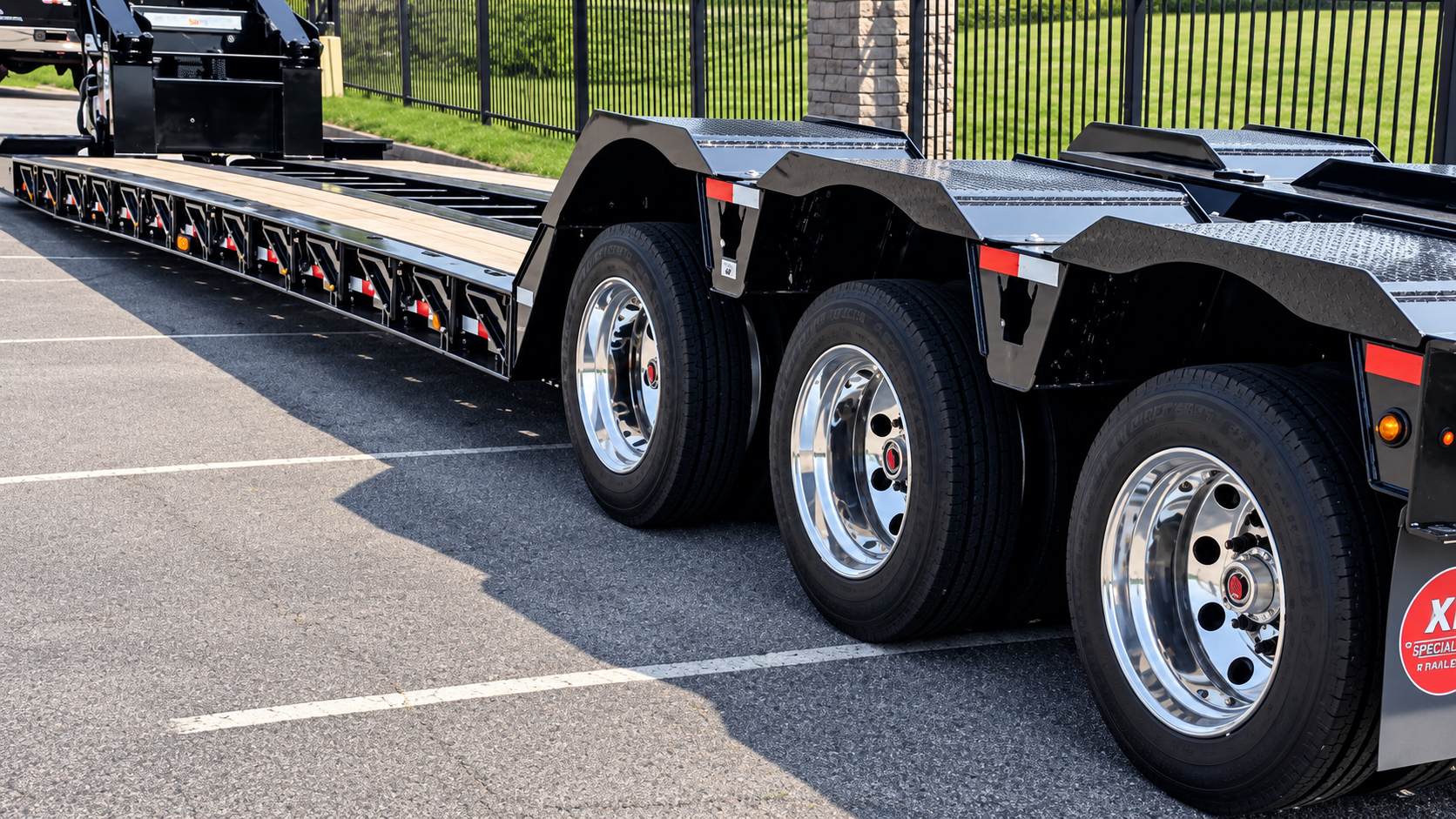
A lowboy trailer is a specialized heavy-haul trailer designed to transport equipment that exceeds the height or weight limits of conventional flatbeds and step deck trailers.
Its defining feature is a low loaded deck height, typically ranging from 18 to 24 inches, allowing taller machinery to remain within legal height limits in many jurisdictions.
Lowboy trailers are commonly used to haul:
Excavators
Bulldozers
Wheel loaders
Motor graders
Cranes
Asphalt pavers
Forestry equipment
Agricultural machinery
Transformers
Oversized industrial equipment
Because these loads often require specialized permits and routing, choosing the proper trailer configuration is just as important as choosing the right capacity.
Heavy-haul lowboy trailers are available in a wide range of capacities to match different industries and applications.
| Capacity | Common Applications |
|---|---|
| 25 Ton | Compact construction equipment, skid steers, smaller excavators |
| 35 Ton | Excavators, bulldozers, loaders, paving equipment |
| 40–50 Ton | Larger construction equipment and utility machinery |
| 55–75 Ton | Heavy construction equipment, industrial machinery |
| 85–100+ Ton | Transformers, cranes, mining equipment, wind energy components, oversized industrial freight |
These capacity classes provide a helpful starting point, but payload rating alone doesn't determine whether a trailer can safely transport your equipment.
The trailer's engineering and configuration are equally important.
Two trailers may both be rated at 55 tons yet perform very differently depending on how they're configured. That's why experienced fleet managers evaluate the complete trailer, not just the capacity sticker.
Axle configuration has one of the biggest impacts on carrying capacity.
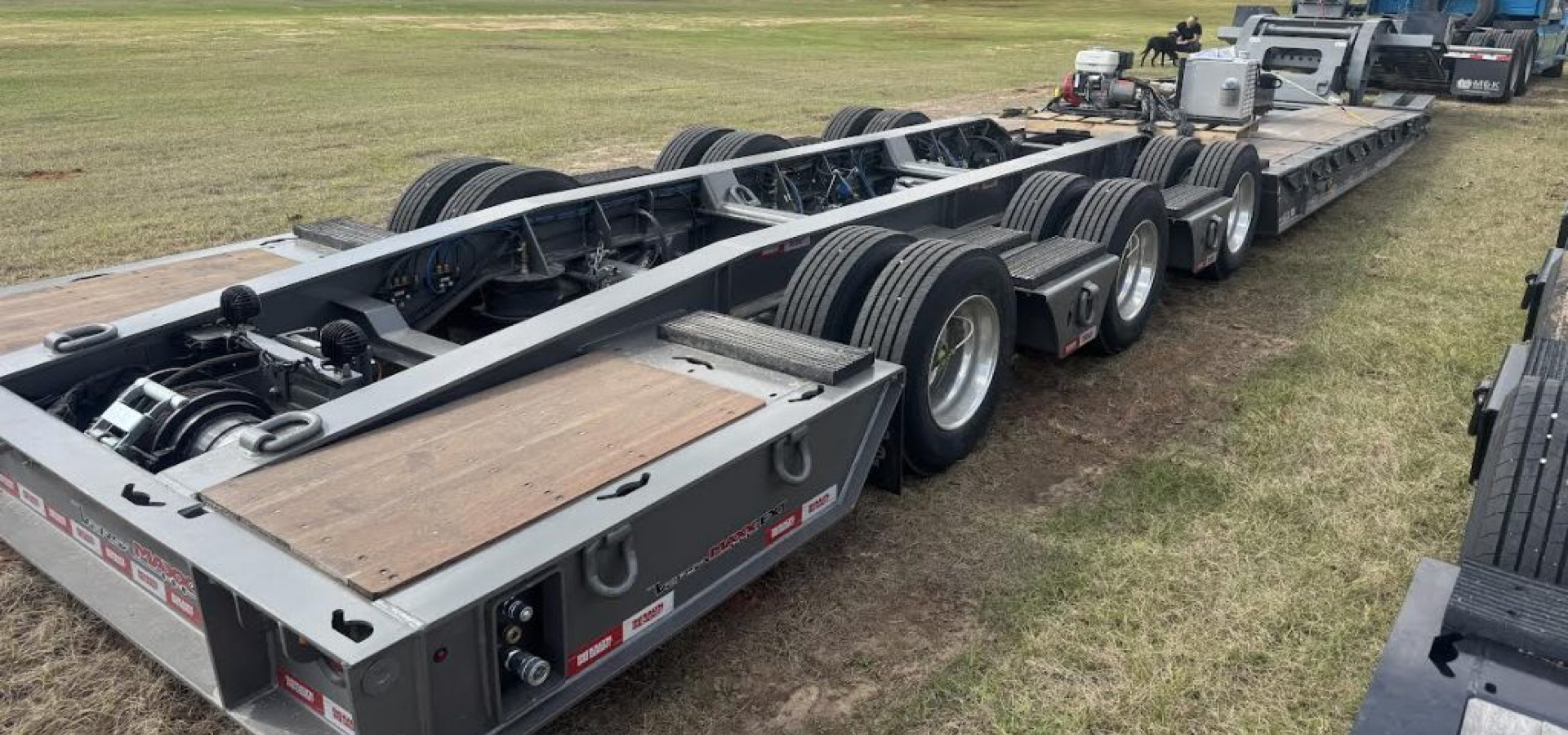
Heavy-haul lowboys are commonly built with two to nine axles, and additional capacity can often be achieved by adding:
Flip axles
Jeep dollies
Deck inserts
Flip neck extensions
These components distribute weight across more axles, helping carriers meet bridge formula requirements while supporting heavier loads.
For specialized hauling applications, axle configuration is often the deciding factor between obtaining a permit or exceeding legal weight limits.
A trailer's structural design determines how it performs over years of commercial use.
Leading manufacturers build heavy-haul trailers using high-strength materials such as T1 steel and A514 steel, engineered to withstand repeated loading cycles while maintaining structural integrity.
Decking material also matters.
Many fleets prefer Apitong wood decking because of its durability and ease of replacement, while steel decking is often selected for specific industrial applications where different loading conditions are common.
The neck style doesn't necessarily increase weight capacity, but it significantly affects loading efficiency.
A Hydraulic Detachable Gooseneck (HDG/RGN) allows equipment to be driven directly onto the trailer from the front, making it ideal for self-propelled machinery such as excavators and bulldozers.
A Mechanical Gooseneck (MRG) provides a dependable alternative that can be an excellent fit for many operations while often requiring a lower initial investment.
The right choice depends on your equipment, loading frequency, and operating environment.
Suspension plays an important role in ride quality, weight distribution, and long-term durability.
Depending on the application, heavy-haul trailers may use:
Air ride suspension
Walking beam suspension
Spring suspension
Each system offers advantages depending on terrain, load characteristics, and operating conditions.
Bigger isn't always better.
A contractor hauling 35-ton excavators every week has different requirements than a carrier moving 85-ton transformers across multiple states. Purchasing more capacity than you need can increase acquisition costs without improving profitability, while buying too little capacity can limit the work your fleet can accept.
When evaluating a lowboy trailer, ask yourself:
What equipment do you haul most often?
What is your heaviest routine load?
Will your hauling requirements grow over the next five years?
Do you anticipate needing flip axles or jeep dollies in the future?
Are you operating locally or across multiple states with varying permitting requirements?
Answering these questions often narrows the best trailer configuration far more effectively than simply shopping by tonnage alone.
Both new and used heavy-haul trailers can be excellent investments.
A new trailer gives you the ability to specify axle configuration, deck dimensions, hydraulic systems, suspension, and other features that match your operation.
Manufacturers including Alpha HD, Kalyn Siebert, XL Specialized, and Fontaine offer heavy-haul trailers ranging from 25-ton models to specialized 100+ ton configurations built for demanding commercial applications.
A quality used trailer can provide immediate availability and a lower upfront investment while still delivering years of dependable service.
HD Trailers also offers a rotating inventory of used equipment from respected manufacturers including Trail King, Talbert, Load King, Aspen, Deloupe, Etnyre, and other trusted heavy-haul brands.
Purchasing a lowboy trailer is a significant investment, but financing can help preserve working capital while allowing your business to put revenue-generating equipment to work sooner.
HD Trailers works with a network of more than 20 lending institutions to help qualified buyers explore financing solutions that fit their operation and budget.
Trade-ins and cash offers on qualifying equipment can also help reduce the cost of upgrading your fleet.
While payload capacity is an important specification, it's only one piece of the decision.
The best trailer for your business also depends on the equipment you haul, your routing and permitting requirements, deck height, axle configuration, loading preferences, and long-term growth plans.
Investing in a trailer that's properly matched to your operation can improve productivity, reduce downtime, and position your fleet to take on larger and more profitable projects in the future.
Every hauling operation is different, and choosing the wrong trailer can be an expensive mistake.
If you're comparing 25-ton, 35-ton, 55-ton, or 100+ ton lowboy trailers, the HD Trailers team can help you evaluate the right configuration based on your equipment, hauling routes, and long-term business goals.
Whether you're looking for a new or used lowboy trailer, exploring financing options, or searching for a specialized configuration that's difficult to find, our heavy-haul specialists are ready to help.
Browse our live inventory online or call 888-380-2509 to discuss your next heavy-haul trailer with an experienced member of the HD Trailers team.
1 min read
Purchasing a heavy-haul trailer is one of the most important equipment decisions a commercial carrier can make. The right trailer can improve loading...
1 min read
Most buyers who call us looking for a trailer already know what they're hauling. They can tell you the equipment, the weight, sometimes even the...
1 min read
Investing in a heavy-haul trailer isn't just another equipment purchase. It's a decision that affects your fleet's productivity, profitability, and...