1 min read
How Much Weight Can a Lowboy Trailer Carry?
If you're shopping for a heavy-haul trailer, one of the first questions you'll ask is: How much weight can a lowboy trailer carry? The short answer...
4 min read
HD Trailers Team
:
Updated on September 4, 2026
If you've ever seen an excavator, bulldozer, or other large piece of construction equipment traveling down the highway, there's a good chance it was riding on a lowboy trailer.
Lowboy trailers are one of the most common trailer types used in heavy hauling because they're designed to solve a specific problem: transporting tall, heavy equipment while staying within legal height limits.
For first-time buyers, however, lowboy trailers can seem confusing. They come in different lengths, axle configurations, and neck styles, and it's not always obvious when a lowboy is the right choice over another trailer.
This guide explains what a lowboy trailer is, why it's used, and what every buyer should understand before comparing models.
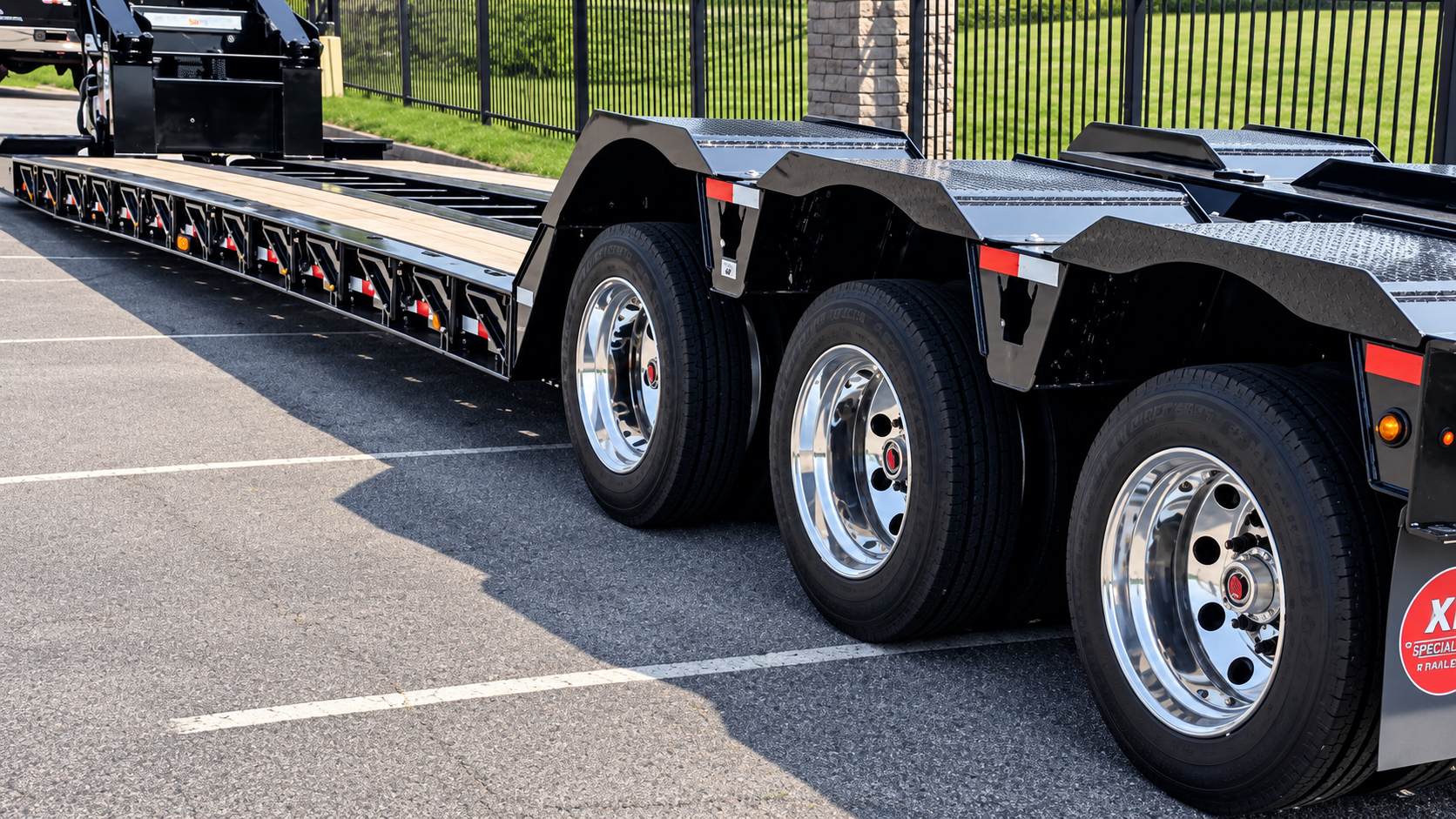
A lowboy trailer is a specialized heavy haul trailer with a deck that sits much closer to the ground than a standard flatbed. That lower deck allows taller equipment to be transported without exceeding legal height restrictions in many situations.
Because of this design, lowboys are commonly used throughout the construction, agriculture, utility, mining, and transportation industries to move equipment that would be difficult—or impossible—to haul on a conventional trailer.
The lower deck also creates a lower center of gravity, helping improve stability when transporting heavy machinery.
The name comes from the trailer's defining characteristic: its exceptionally low deck height.
A standard flatbed typically rides around five feet above the road, while a lowboy positions the load significantly lower. Those extra inches of clearance can make the difference between transporting a machine legally and exceeding highway height restrictions.
For contractors and equipment owners, that lower deck often reduces the need for alternate routes, additional permits, or costly transportation workarounds.
This is one of the most common questions first-time buyers ask.
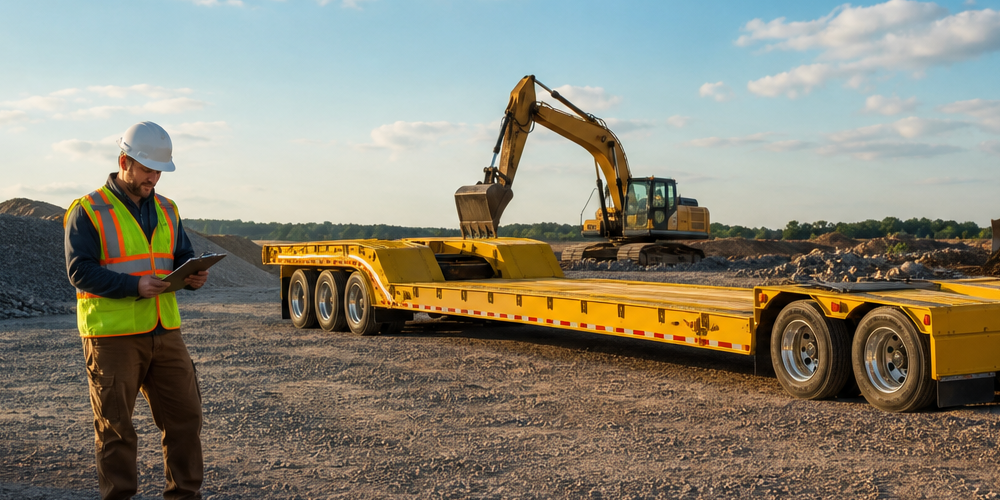
For many types of cargo, a flatbed works perfectly well. But construction equipment presents a different challenge. Machines like excavators, dozers, and wheel loaders are often both tall and heavy. Once they're loaded onto a standard flatbed, the total height may exceed legal limits for highway travel.
A lowboy solves that problem by lowering the equipment between the gooseneck and the trailer axles. That design provides additional vertical clearance while also improving stability for heavier loads.
In many cases, the decision to use a lowboy isn't about preference—it's about safely and legally transporting the equipment.
Lowboy trailers are typically chosen when the size, weight, or height of the equipment makes a standard trailer impractical.
For example, a contractor transporting a skid steer or compact tractor may be able to use a conventional equipment trailer. Moving a large excavator, articulated loader, or asphalt paver is a different situation altogether. Those machines often require the additional clearance and capacity that a lowboy provides.
The right trailer ultimately depends on the equipment you're hauling—not simply the industry you work in.
The lowered deck sits between the gooseneck and the rear axles, creating the extra clearance that gives the trailer its name.
Many lowboy trailers also feature detachable goosenecks, allowing equipment to be driven directly onto the deck from the front rather than loaded over ramps. For businesses that load and unload equipment throughout the day, this can save time and simplify the loading process.
Buyers will typically encounter two common approaches.
A fixed gooseneck (FGN) offers a simpler design that's often well suited for operators who don't frequently load equipment from the front.
A detachable gooseneck, available in mechanical and hydraulic versions, separates from the trailer deck so equipment can be driven directly onto the trailer. Hydraulic systems generally make loading faster and require less manual effort, while mechanical systems typically offer a lower purchase price.
The right choice depends on how often the trailer will be loaded, the types of equipment being transported, and the owner's budget.
Lowboy trailers aren't one-size-fits-all. Manufacturers offer a wide range of configurations designed around different payloads and applications.
Common differences include axle count, deck length, overall capacity, and whether the trailer is fixed or extendable. Buyers hauling compact construction equipment may find a standard tandem-axle configuration meets their needs, while companies transporting oversized or exceptionally heavy machinery often require additional axles or specialized configurations.
Rather than choosing the largest trailer available, experienced buyers typically match the trailer's specifications to the equipment they'll haul most often.
One of the biggest misconceptions is that lowboy trailers are only used for the largest machines on the jobsite.
In reality, they're used to transport a wide variety of equipment whenever height or weight becomes a concern.
| Equipment | Commonly Hauled on a Lowboy? |
|---|---|
| Mini excavators | Yes |
| Mid-size excavators | Yes |
| Bulldozers | Yes |
| Wheel loaders | Yes |
| Asphalt pavers | Yes |
| Cranes | Often |
| Agricultural equipment | Frequently |
| Industrial machinery | Yes |
The deciding factor isn't simply the type of equipment—it's the overall dimensions and weight of the load.
The biggest advantage of a lowboy is its ability to transport taller equipment while maintaining legal highway height in many situations. That alone makes it an essential tool for countless contractors and heavy haul operators.
The lower deck also improves stability by lowering the equipment's center of gravity. Combined with the option of front-loading detachable goosenecks, lowboy trailers can make transporting heavy machinery safer, faster, and more efficient than many alternative trailer designs.
If your business regularly transports construction equipment, agricultural machinery, paving equipment, or other tall and heavy loads, a lowboy is often the most practical solution.
The better question isn't whether a lowboy is the "best" trailer—it's whether it's the best trailer for the equipment you move every day. Understanding your typical load dimensions, operating routes, and future equipment needs will narrow the field much faster than comparing models alone.
Many first-time buyers focus on deck length or axle count, but those are only part of the decision. The equipment you're hauling, how often you'll load it, where you'll travel, and whether your fleet is likely to grow all influence which lowboy configuration makes the most sense.
If you're still comparing options, it's often helpful to start with your equipment rather than the trailer itself. Once you know the size, weight, and loading requirements of your most common machines, choosing the right lowboy becomes a much more straightforward process.
HD Trailers can help you evaluate those requirements and compare available configurations so you're investing in a trailer that fits your operation, not just your next job.
1 min read
If you're shopping for a heavy-haul trailer, one of the first questions you'll ask is: How much weight can a lowboy trailer carry? The short answer...
1 min read
Purchasing a Heavy Haul Trailer is a significant investment, but comparing trailers isn't as simple as choosing the highest capacity or the lowest...
1 min read
When people hear the term equipment trailer, they often think of a trailer designed to transport machinery from one jobsite to another. While that's...
1 min read
Most buyers who call us looking for a trailer already know what they're hauling. They can tell you the equipment, the weight, sometimes even the...