 HD Trailers Team
Walk onto a dealer lot and you may find a trailer that checks nearly every box. But for some heavy-haul operations, that last unchecked box (a deck height, a well length, an axle configuration) can be the one your load can't work around.
We spoke with Matt Brunscheon of XL Specialized Trailers about the difference between buying a stock trailer and configuring one around a specific application. The choice is not about whether custom is automatically better. It is about determining what the trailer needs to do today and where it may need to take the business next.
Start With the Load, Not the Rating
Buyers often begin with capacity: 40-ton, 55-ton or 65-ton. That rating matters, but it does not by itself determine whether a trailer is suited to the work.
An operator whose typical loads weigh about 67,000 pounds, for example, may not benefit from a 55-ton trailer simply because another carrier runs one. The load’s dimensions, center of gravity, loading method, route restrictions and the tractor setup can all affect which configuration makes sense.
 As Matt puts it:
"The starting point shouldn't just be, 'What tonnage trailer do I want?' It should be, 'What am I trying to haul?' The dimensions of the load, the weight, the tractor setup, where the trailer will operate and what the customer may need to haul in the future can all change what the right configuration looks like."
Once the load profile is clear, the next question is whether a standard configuration can meet those needs without compromise.
When a Stock Trailer Fits
There is nothing inherently limiting about buying stock. For many operations, a stock trailer offers the needed capacity, dimensions and versatility without the added time or complexity of a custom build.
Stock configurations are designed to serve a broad range of applications. That can make them a practical choice for carriers with varied or conventional loads, particularly when an available configuration already fits the work.
The limitation is not quality; it's fit. A stock trailer must accommodate many potential buyers, while a custom configuration can be designed around one operation’s equipment, priorities and anticipated work. As Matt explains:
"A stock trailer has to work for a broad range of customers. When you're building for a specific operation, you can look much more closely at that customer's loads and priorities and configure the trailer around the work they need it to do."
Look Beyond Capacity
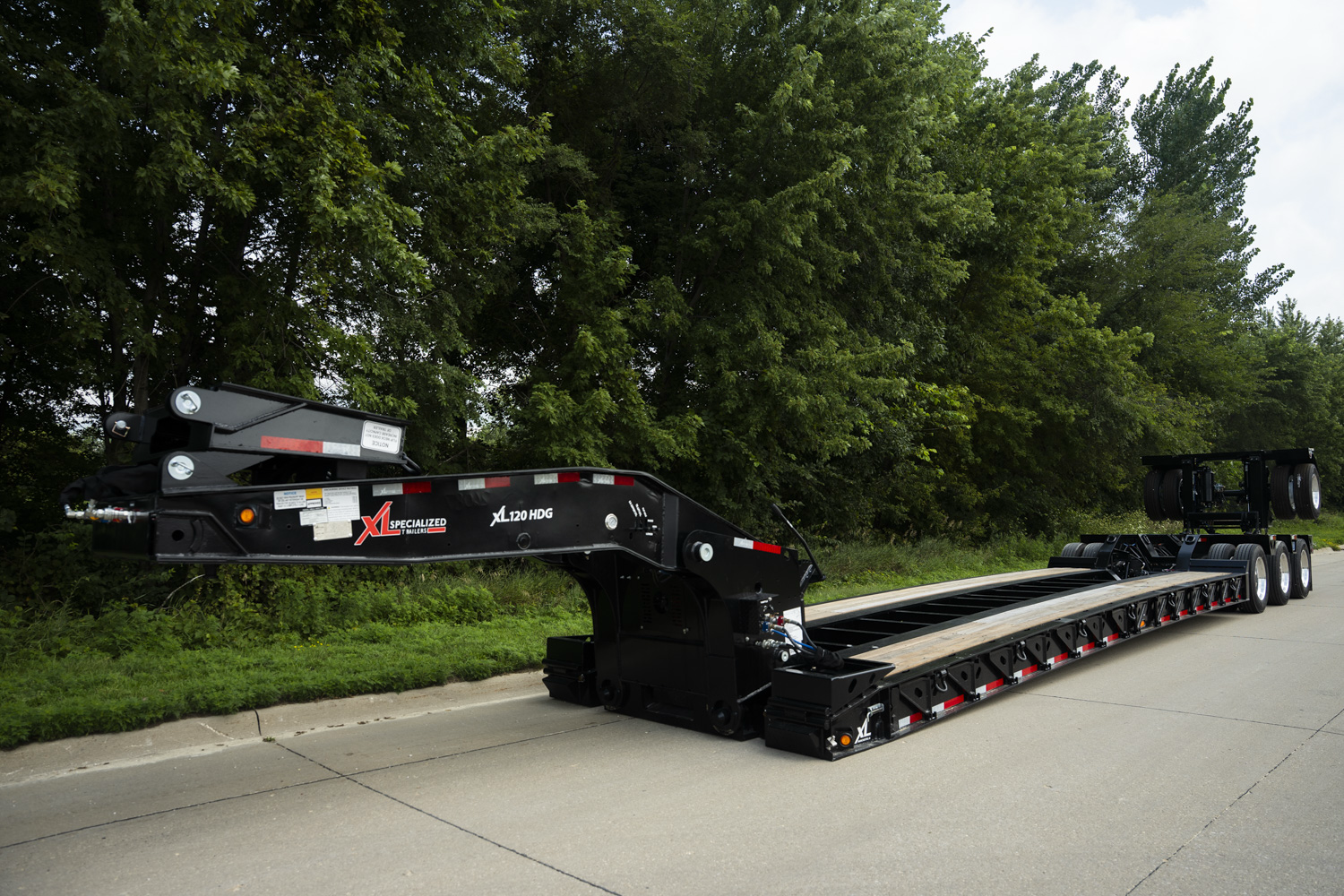
Capacity may get the most attention, but a trailer’s real-world usefulness depends on how its specifications work together. Heavy-haul buyers should evaluate:
- Loaded deck height
- Well length or usable deck length
- Overall trailer weight
- Payload capacity (legal load allowance)
- Axle capacity and configuration
- Provisions for additional axles or axle equipment
- Width requirements and permitted route considerations
- Compatibility with the tractor and loading equipment
These details can be especially important when equipment is being purchased for dedicated or contracted work. An end customer may require a specific loaded deck height, width or usable deck length before approving the equipment proposed for a job.
In that situation, a trailer with sufficient capacity may still be the wrong trailer if the deck is too high, the well is too short or the axle configuration does not support the required payload and permitting strategy.
Matt summed it up this way:
"There isn't one specification that makes a trailer right for a customer. It's how the capacity, dimensions, weight and configuration work together for that customer's application."
Plan for the Work Ahead
A custom build can also help an operation prepare for business it expects to pursue, not just the loads already on the schedule.
Before making a decision, buyers should consider:
- What equipment will the company likely haul next year?
- Which potential contracts are out of reach with the current fleet?
- Would provisions for additional axles expand payload capability when needed?
- Could a different deck configuration make the trailer useful for a wider range of priority loads?
- Are upcoming customer requirements likely to change the trailer’s ideal dimensions or configuration?
No single heavy-haul trailer can do everything. The goal is not to build for every possible load; it is to select the combination of features that best supports the operation’s most valuable work and realistic growth opportunities.
Start With the Work
A stock trailer may already provide everything an operation needs. A custom build may be worth considering when the loads, routes, tractor setup or future business plans require a more specific configuration.
The better question is not, “How much trailer can I buy?”
It is, “What does this trailer need to help my business do?”
Before making that investment, read Before You Spend $100K on a Trailer: A Buyer Guide for Heavy-Duty and Equipment Hauling for additional specifications and considerations to work through before you buy.