 HD Trailers Team
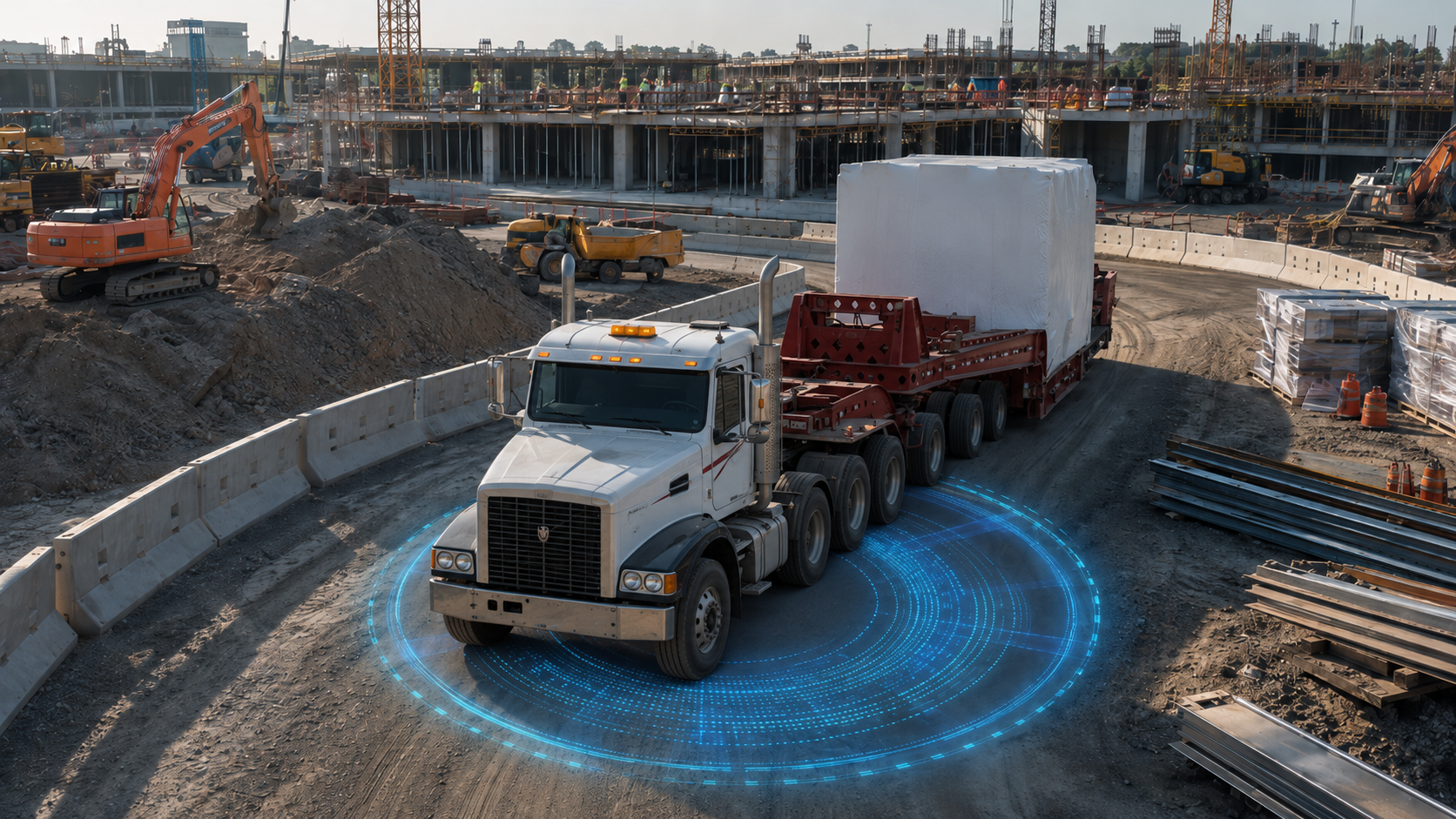

We sat down with Troy Geisler, President of Kalyn Siebert, to get his take on where automation is headed in heavy haul. Self-driving trucks make headlines every few months, and it's a fair question for anyone in this industry to ask: is this coming for us too? According to Troy, a 20-year veteran of the specialized trailer industry, the honest answer is: not anytime soon, and maybe not ever, at least not the way people picture it.
It's Easy to Automate a Box. It's Hard to Automate Everything Else.
"There's advancements out there," Troy says, pointing to driver-facing and forward-facing cameras that insurance companies are increasingly interested in as a starting point. But heavy haul isn't hauling a standard box down the interstate. It's hauling something different every time.
"We're dealing with a variety of footprints," he explains. Length, width, height: none of it is standardized load to load. And when the load isn't a uniform rectangle, the weight doesn't sit centered and balanced the same way twice. Troy's point is straightforward: predicting how a load is going to position and balance itself going down the road would require a level of sensor sophistication that doesn't currently, and may never, exist at a price point that makes sense.
The Tight Spots Are the Real Problem
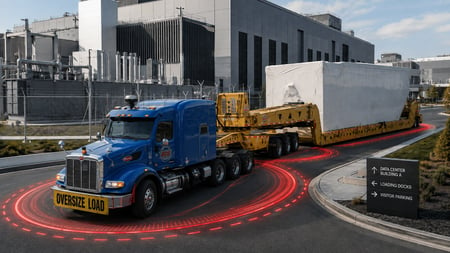 It's not just the highway that's the challenge. It's the truck stops, the sharp angles, the moments that require feel as much as calculation. "You've got to be delicate with that," Troy says. He describes the specialized driving crew in this industry as artists: people whose judgment in those tight, high-stakes moments isn't something you can bolt a sensor package onto and replace.
Troy puts it simply: it's one thing for an automated vehicle to deliver a pizza on regular roads. It's an entirely different problem to autonomously balance and maneuver a load where the margin for error is measured in inches and tons. "I'm going to go out on a limb," he says, "and say it's going to be quite a while, if ever," before automation replaces the drivers who do this work.
Where Automation Is Actually Showing Up (And It's Not Where You'd Expect)
None of this means technology is standing still in heavy haul. It's just showing up in narrower, more practical ways than full autonomy:
- Scale systems that measure how much weight is being placed on airbags in real time, helping predict load balance before it becomes a problem on the road.
- Tire sensors that can inflate (and in some cases both inflate and deflate) tires while the trailer is moving, protecting both the load and the tires themselves, which Troy notes "are pretty doggone expensive."
- Cabin sensor packages that Troy describes as turning a familiar vehicle into something closer to "your common vehicle, but on steroids."
These are real, deployable improvements that make the job safer and more efficient. They're just aimed at supporting the driver, not replacing them.
The Takeaway for Buyers and Operators
If you're evaluating new equipment, the smart move isn't waiting around for autonomy to change the game. It's paying attention to the sensor and monitoring technology that's already available now, including load balance systems, tire management, and cabin monitoring, and understanding how those features fit into your operation today. The drivers who master this equipment are the differentiator in this industry, not a line item on a spec sheet that's going away anytime soon.
Curious what today's trailer technology can do for your operation? Contact HD Trailers and talk to a team with decades of hands-on experience matching operators with the right equipment, sensors, and support for the loads they haul every day.
