 HD Trailers Team
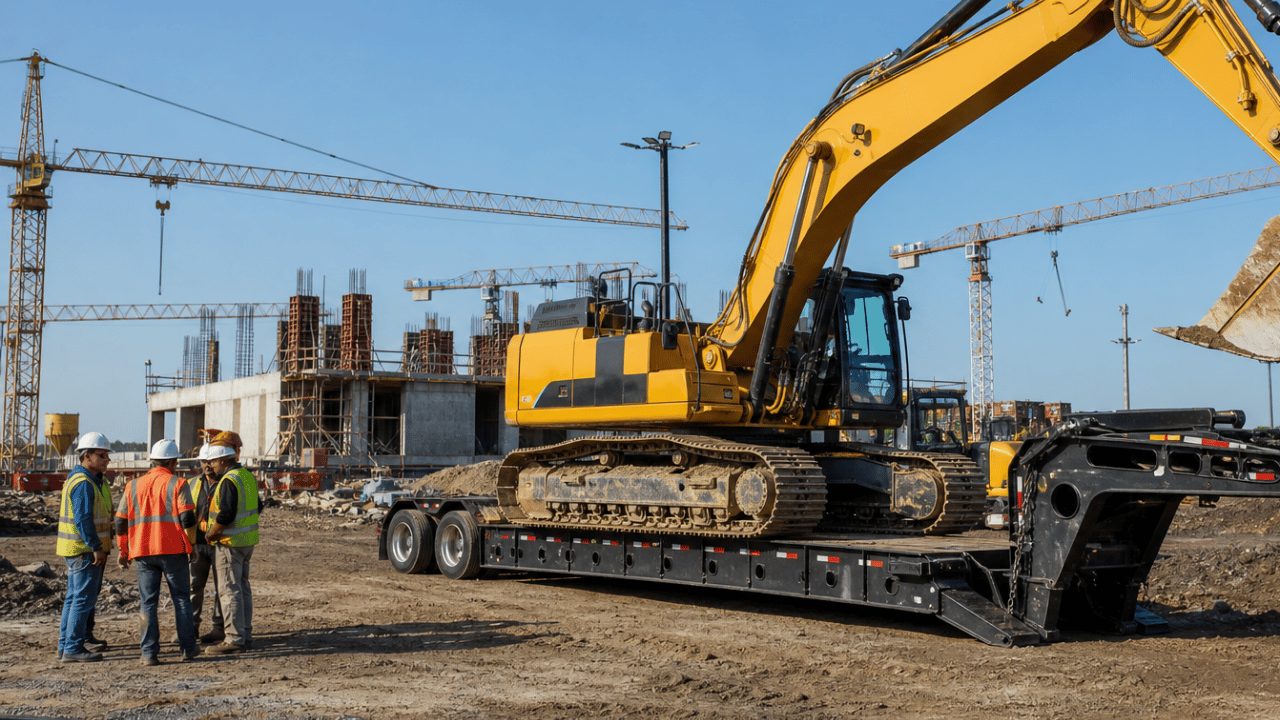
Moving oversized equipment requires more than simply finding a trailer with enough capacity. Overall load height, route restrictions, loading efficiency, and state permitting all influence whether a piece of equipment reaches the job site efficiently or becomes a logistical challenge.
That's why lowboy trailers are widely used in heavy-haul transportation.
Designed with a significantly lower deck than conventional trailers, lowboys allow commercial operators to transport tall, heavy equipment while helping manage overall transport height and stability. From construction and infrastructure projects to agriculture and energy, these trailers play a critical role in moving machinery that standard trailers may not be suited to handle.
At HD Trailers, we help commercial buyers compare new and used lowboy trailers for a wide range of heavy-haul applications. Understanding what a lowboy trailer is, and when it's the right choice, can help you build a fleet that's prepared for today's jobs and tomorrow's opportunities.
What Is a Lowboy Trailer?
A lowboy trailer is a heavy-haul trailer with a deck positioned much lower than a standard flatbed or step deck. That lower profile allows taller equipment to be transported with reduced overall loaded height, potentially helping operators meet applicable height restrictions or reduce the need for certain overheight permits.
Lowboy trailers are commonly available in capacities ranging from 25 tons to more than 100 tons, with configurations designed for everything from routine construction equipment moves to specialized oversized loads.
Some lowboy trailers feature a Hydraulic Detachable Gooseneck (HDG/RGN) that allows equipment to drive directly onto the trailer from the front. Others utilize mechanical detachable or fixed neck designs depending on the intended application. Regardless of configuration, the defining characteristic is the trailer's low deck, which helps accommodate taller equipment.
For a closer look at how lowboys compare with other configurations, see our heavy-duty trailer comparison guide.
Why Use a Lowboy Trailer?
Imagine a contractor transporting a 50-ton crawler excavator to a bridge replacement project several states away.
On a conventional trailer, the excavator's overall height could require additional permits, force a longer route to avoid low overpasses, or even make the planned trip impractical. By transporting the same machine on a properly rated lowboy trailer, the equipment rides significantly closer to the ground, potentially reducing overall transport height and simplifying route planning.
For companies that regularly move large construction equipment, these advantages extend far beyond convenience. Fewer routing restrictions, efficient loading, and greater operational flexibility can reduce transportation challenges while helping keep projects on schedule.
That's why many commercial fleets view a lowboy not simply as another trailer, but as an investment in operational capability.
What Equipment Can a Lowboy Trailer Haul?
Lowboy trailers are built for equipment that combines substantial weight with significant height.
Construction contractors frequently use them to transport excavators, bulldozers, wheel loaders, motor graders, pavers, rollers, and cranes between jobsites. Utility and energy companies rely on lowboys to move generators, transformers, and specialized support equipment, while agricultural operations use them to relocate large machinery between fields and facilities.
Although these machines serve different industries, they can present the same transportation challenge: they're often too tall, heavy, or difficult to load efficiently on conventional trailers.
Selecting the proper lowboy configuration isn't simply about matching the trailer's capacity to the equipment's weight. Deck height, well length, axle configuration, and weight distribution all influence how safely and efficiently that equipment can be transported.
For more detailed guidance, read our article on how to choose the right trailer for your equipment.
Industries That Rely on Lowboy Trailers
Lowboy trailers serve a wide range of commercial sectors that depend on oversized machinery.
Construction companies use them to move equipment between jobsites, minimizing downtime while accommodating machines that exceed the practical limits of standard trailers. Infrastructure contractors face similar challenges when transporting equipment for bridge, highway, and municipal projects, where route planning often involves navigating height restrictions on public roads.
Agricultural operations depend on lowboys to relocate combines, tractors, and other large equipment between seasonal work locations. In the energy sector, they transport generators, transformers, and equipment supporting utility and wind energy projects.
Heavy-duty towing and recovery companies also use lowboys to move disabled commercial vehicles and specialized equipment when the load and loading requirements are suitable for the trailer configuration.
While the industries differ, the objective remains the same: transporting large equipment safely, efficiently, and with fewer logistical obstacles.
Choosing the Right Lowboy Trailer
Not every lowboy trailer is built for the same type of work.
Capacity is the obvious starting point, but experienced buyers know that choosing the right trailer requires looking well beyond tonnage. Purchasing a trailer based solely on today's equipment may limit your fleet's flexibility as future hauling requirements evolve.
Neck configuration is often the next major consideration. A Hydraulic Detachable Gooseneck allows operators to load equipment directly from the front, making it an excellent choice for fleets that frequently transport self-propelled machinery.
Mechanical detachable gooseneck designs offer similar front-loading functionality, with different operating and maintenance requirements that may appeal to certain operators.
Axle configuration also deserves careful evaluation. The number and arrangement of axles influence weight distribution, permitting, and hauling flexibility. Operations transporting especially heavy loads may also benefit from compatible flip axles or jeep dollies, provided the complete combination meets manufacturer ratings and applicable permit requirements.
Finally, compare the specifications that directly affect day-to-day operation: loaded deck height, well length, deck width, ground clearance, swing clearance, and suspension. Two trailers with identical capacity ratings can perform very differently once they're hauling equipment on the road.
Our guide to comparing heavy-haul trailer specifications explains the important details buyers should evaluate before making a purchase.
Lowboy Trailer vs. RGN: What's the Difference?
These terms are often used interchangeably, but they describe different aspects of a trailer.
A lowboy refers to the trailer's low deck design, while an RGN (Removable Gooseneck) describes a detachable neck configuration that allows front loading. Removable goosenecks may use hydraulic or mechanical systems, depending on the trailer design.
Many heavy-haul trailers combine both features, pairing a lowboy deck with a hydraulic detachable gooseneck. Others may use a mechanical detachable or fixed neck while still benefiting from the low deck that defines a lowboy.
Understanding this distinction helps buyers compare trailers more accurately and focus on the features that best support their hauling requirements.
New vs. Used Lowboy Trailers
The choice between a new and used lowboy trailer depends on your fleet's priorities.
A new trailer may offer the opportunity to specify the configuration your operation requires when ordering a manufacturer build. In-stock new trailers provide established specifications, and applicable manufacturer warranty coverage varies by model and terms.
For fleets planning to keep equipment in service for many years, the long-term benefits of a new unit may make sense.
A well-maintained used lowboy can also be valuable for businesses looking to expand capacity while managing upfront costs. Used equipment should be evaluated for structural condition, maintenance history, hydraulic systems where equipped, and overall compatibility with the intended application.
Many successful commercial fleets operate a combination of new and used trailers, balancing long-term reliability with cost-effective growth.
Rather than asking whether new or used is universally better, consider which option best aligns with your equipment, budget, and operational goals.
You can browse new and used heavy-haul trailer inventory at HD Trailers to compare available configurations and specifications.
Why Buy a Lowboy Trailer from HD Trailers?
Finding the right trailer is about more than comparing specifications on a brochure.
HD Trailers connects commercial buyers with a nationwide inventory of new and used heavy-haul trailers from trusted manufacturers, including Alpha HD, Kalyn Siebert, XL Specialized, and Fontaine.
Beyond inventory, we offer financing options through a network of more than 20 lending institutions, trailer trade-in opportunities, cash offers for sellers, rental and lease solutions, and nationwide buying and selling services.
Our team works with heavy-haul operators, helping customers compare trailer configurations based on how equipment is actually transported, not simply what looks best on a specification sheet.
Find the Right Lowboy Trailer for Your Fleet
Let's return to that 50-ton crawler excavator.
The best trailer isn't simply the one with enough capacity to carry it. It's the one that allows the machine to travel efficiently, accommodates its loading requirements, meets applicable transportation restrictions, and supports the types of projects your business wants to pursue next.
That's exactly the kind of work a properly configured lowboy trailer is designed to handle.
Whether you're expanding your fleet, replacing an aging trailer, or preparing for larger hauling opportunities, HD Trailers can help you compare new and used lowboy trailers and identify the configuration that fits your operation.
Browse Available Heavy Haul Trailer Inventory, explore financing options, or speak with one of our heavy-haul specialists to find the right lowboy trailer for your business.
Call: 888-380-2509
Email: sales@HDtrailers.com