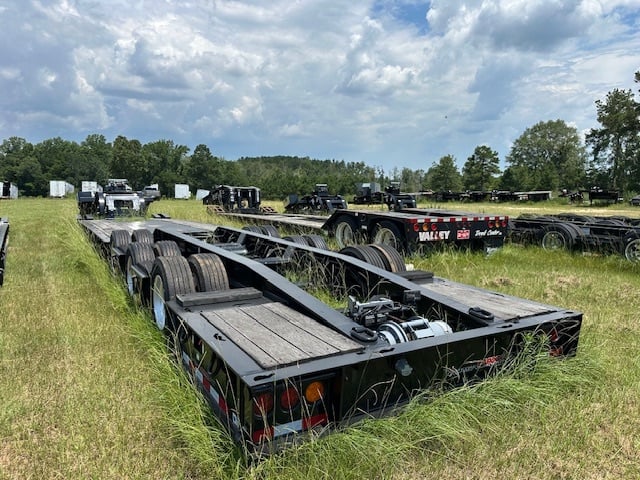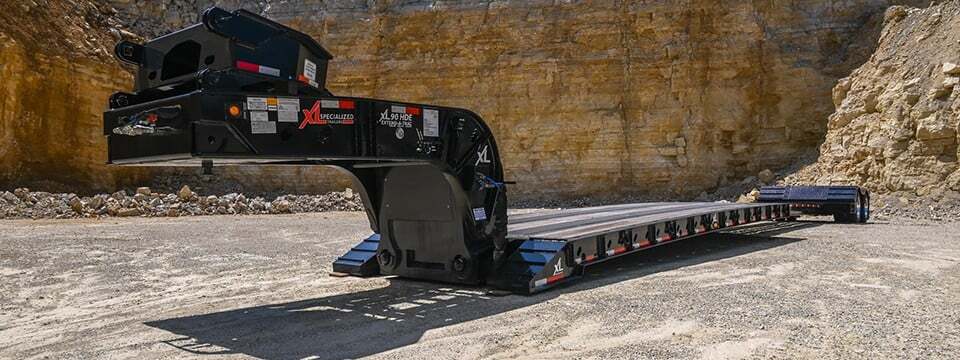
A used heavy-duty trailer can offer a lower purchase price and faster availability than a new build, which makes it worth serious consideration for buyers who need capacity fast.
Age and price only tell part of the story. A trailer that's carried heavy loads and worked in tough conditions can still have plenty of service life left. The way to know is a close inspection of the structure and working components.
Start With the Frame
The frame is the foundation, so it gets the closest look. Check the main beams, upper and lower flanges, crossmembers, neck, transition areas, axle mounting points, and any outriggers, bucket wells, boom troughs, or loading zones.
Look for:
- Cracks in the steel or welds
- Bent or distorted beams and crossmembers
- Buckling or twisting
- Corrosion and material loss
- Separated welds
- Added plates or reinforcement
- Stretched or uneven steel
- Paint color or texture differences that may indicate a repair
Fresh paint can mean the trailer's been cared for, but it can also mask damage. Check the underside and other hard-to-see spots to confirm.
A previous repair isn't a strike against the trailer. Heavy-duty equipment is repaired throughout its working life, and a well-repaired trailer can be just as strong as one that's never needed work. What matters is why the repair was needed, who did it, and whether it followed manufacturer or engineering guidance. Irregular welds, grinding marks, mismatched steel, or reinforcement in one spot are worth a closer look to confirm the repair was done right.
Understand How the Trailer Has Been Used
Heavy-duty trailers are built to flex, and wear patterns tell you how well the trailer matches its history. Check crossmembers, welds, flanges, decking, and alignment for signs of stress. A trailer that hauled occasional loads and one that ran heavy every day will show it, so ask what it hauled and how often it was used, and pay attention to concentrated-load areas specifically.
Maintenance records and repair invoices help confirm what you find. Without them, the physical inspection carries more of the weight, and that's fine, it's a reliable source of information on its own.
Confirm the Running Gear Is Ready to Roll
Start with tires: tread, sidewalls, manufacturing dates, inflation, and consistency across axles. Even wear is a good sign; uneven wear is worth tracing back to its cause.
Uneven wear may point to:
- Axle misalignment
- Worn suspension components
- Improper inflation
- Bent components
- Repeated uneven loading
New tires are a plus, but it's worth asking why they were replaced and checking the rest of the running gear that may have caused the wear.
Review:
- Hubs
- Wheel bearings and seals
- Drums
- Brake linings or shoes
- Brake chambers
- Air lines
- Slack adjusters
- Wiring
- ABS components
Check for leaks, damage, corrosion, and contamination. If tire wear is visible, measure axle alignment rather than guessing.
On air-ride trailers, check airbags, leveling valves, dump controls, mounting points, and plumbing. On mechanical suspensions, check springs, bushings, hangers, equalizers, and connecting hardware.
Put Every Moving System to the Test
For trailers with hydraulics, ramps, a detachable neck, sliding axles, or extendable sections, run each system through its full range rather than relying on a visual check.
Depending on the trailer, test:
- Hydraulic cylinders
- Neck operation
- Sliding axle systems
- Extendable decks
- Loading ramps
- Dock levelers
- Winches
- Outriggers
- Landing gear
- Wireless and manual controls
Smooth, consistent movement across a few cycles, including after the system's warmed up, is what you're looking for. Watch for leaks, scoring, hesitation, drift, binding, or noise. Also check how hydraulic, electrical, and air lines are routed and protected.
Confirm the Deck and Securement Are Ready to Load
Check the deck surface for broken boards, soft spots, loose sections, heavy wear, or uneven repairs, especially where equipment is loaded and supported most often. Check the crossmembers and supporting structure beneath the deck too.
Then check the components that position and secure the load:
- Tie-down slots
- D-rings
- Chain drops
- Ratchet winches
- Stake pockets
- Rub rails
- Outriggers
Look for solid welds and firmly attached components. Operate deployable parts like outriggers to confirm they extend, lock, and support properly, and confirm any removable parts are included, straight, and compatible with the trailer.
Buy With Confidence
A used trailer doesn't need to be perfect. It needs a clear inspection showing what's been maintained, what needs attention, and what to expect going forward.
Review your findings alongside any maintenance records, repair invoices, title information, and manufacturer specs. If anything raises a question, bring in someone experienced with heavy-duty trailer service and construction to confirm.
Want a second set of eyes on your next trailer? HD Trailers has more than a decade of experience helping buyers evaluate used equipment. Our team can walk the trailer with you, weigh repair costs against remaining component life, and confirm it's ready for the work ahead. Talk with us before making the investment.