HD Trailers Team
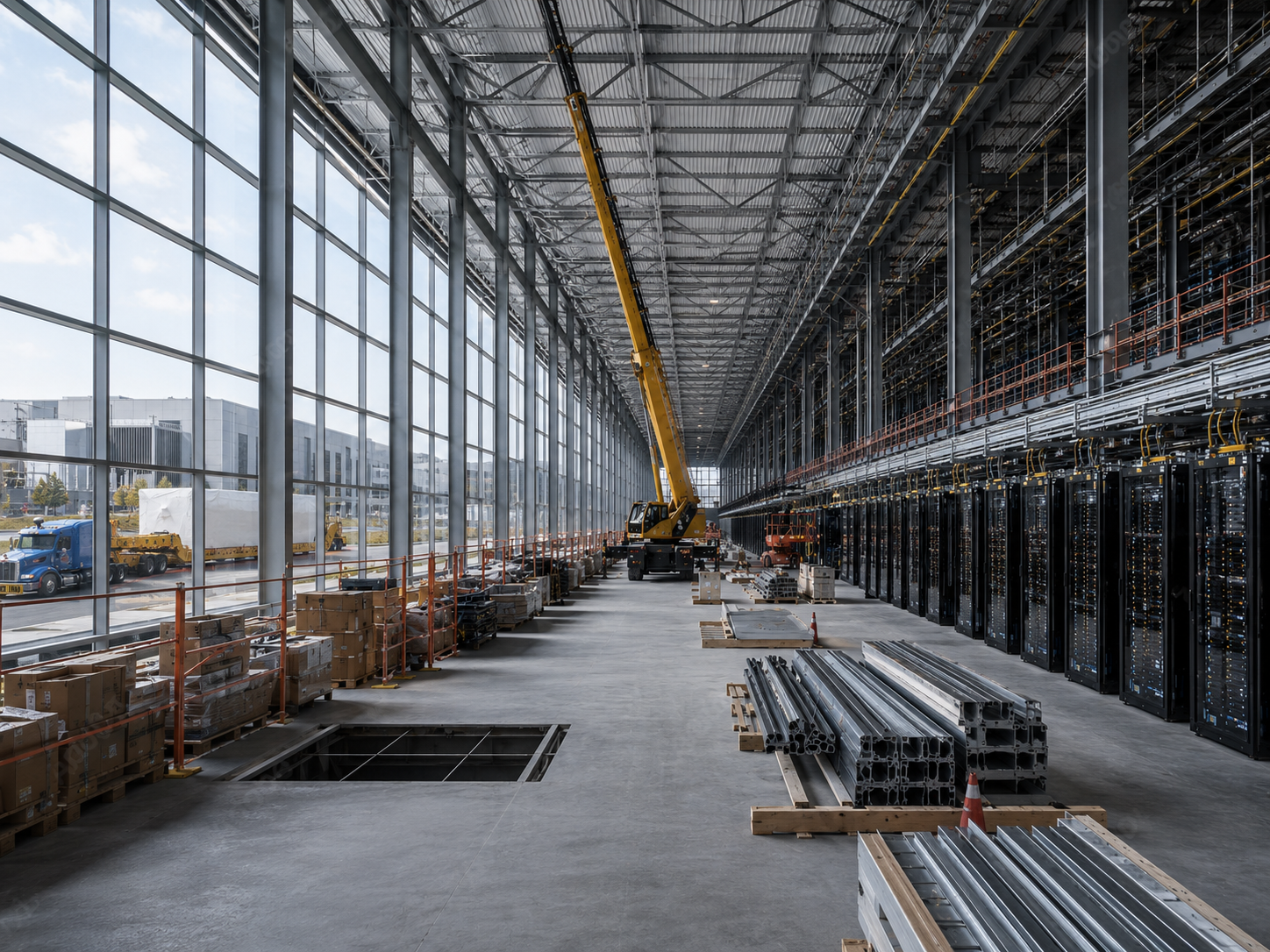
 Data center construction has been driving specialized trailer demand for a few years now, and most operators in this industry already feel it. What's less clear is how strong this opportunity really is, how long it's likely to last, and what it means for how you position your fleet going forward.
We sat down with Troy Geisler, President of Kalyn Siebert, to talk through it: according to Troy, the industry is "on the front end of the data center blitz," and if history is any guide, this boom is going to reshape demand the same way a few others already have.
This Isn't the First Boom, and It Won't Be the Last
Troy has been in heavy haul long enough to watch this pattern play out more than once. "We've seen booms in oil and gas. We've seen the wind energy just go off and go strong," he says, and each time, it created a surge in demand for trailers that could handle loads outside the standard playbook. Data centers are the current version of that same story: a fast-growing sector with equipment needs that don't fit neatly into off-the-shelf trailer specs. But he's quick to add a caveat: "the industry is cyclical, and what goes down definitely goes up."
That word, cyclical, is the important one. Every boom eventually plateaus, and something else takes its place. Buyers who treat the current wave as permanent, spec'ing equipment only for data center work and nothing else, are setting themselves up for a hard landing whenever the next shift happens.
What This Means If You're Buying or Growing Right Now
Troy's advice for operators riding this wave isn't to chase it exclusively. His own words: the goal is "really trying to anticipate what that next trend and boom is going to be, but also networking enough to support different jobs in your respective geographical footprint... to spread yourself and be well-rounded." In practice, that means:
- Networking enough to pick up work across different job types and different regions, so you're not entirely dependent on one sector's momentum.
- Anticipating what the next trend is likely to be, rather than assuming today's demand curve holds steady.
- Spreading yourself across your geographic market well enough that a slowdown in one area doesn't stall your whole operation.
The operators who come out ahead in any boom are usually the ones who were already diversified before it started, not the ones scrambling to diversify once it ends.
The Boom Is Colliding With a Workforce Squeeze
There's a second layer to this that doesn't get talked about as much: the people problem. Troy points to shortages that span the entire industry: drivers, mechanics, and inside the factory, welders, painters, and assemblers. And it's not a short-term blip. With a wave of retirements coming over roughly the next eight to ten years, that gap is only going to widen.
His point is that equipment and workforce have to be treated as one problem, not two. "You want to make sure that your equipment is in tip-top shape so that you can attract the workforce and keep your drivers, keep your mechanics," he says. A well-maintained fleet isn't just about uptime. It's part of how you compete for the people you need to run it.
Building for the Next Boom, Not Just This One
 Taken together, Troy's answers point to a simple pattern: booms reward operators who were already prepared, not the ones reacting in real time. That means having a real preventative maintenance rhythm in place, daily, weekly, monthly, and quarterly, so your equipment can handle whatever the current surge throws at it, and whatever comes after it slows down.
Data centers are today's growth story. The next one is already somewhere on the horizon. The operators who treat this boom as a chance to strengthen their whole operation, equipment, people, and geographic reach, will be the ones ready for whatever comes next.
Positioning your fleet for the next wave of demand starts with the right equipment decisions today. Contact HD Trailers and talk to a team with deep experience helping operators stay ahead of shifting demand, from equipment specs to long-term fleet planning.