HD Trailers Team
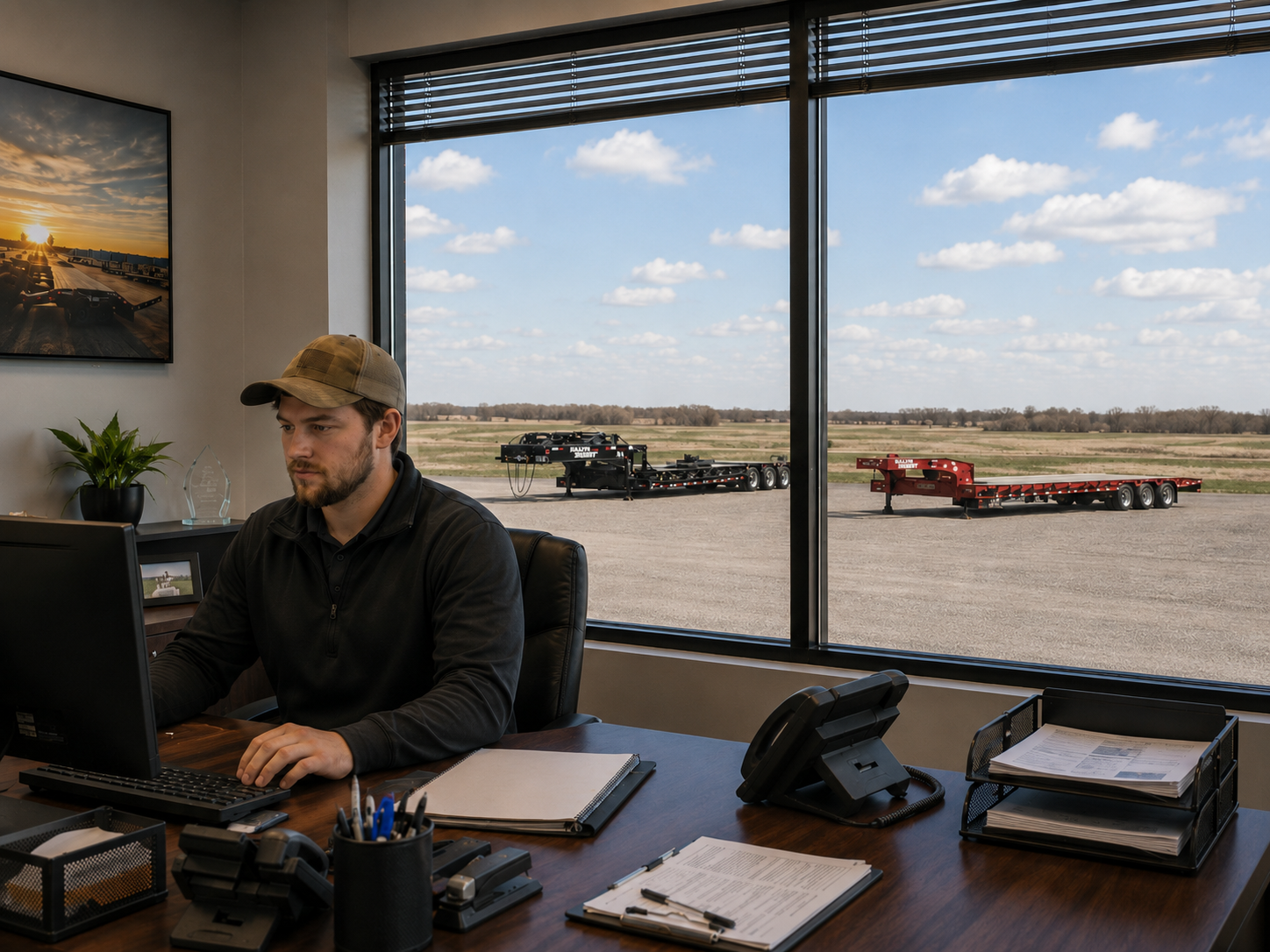
 Most first-time buyers walk into the trailer-buying process asking the wrong first question. They ask "what's the best trailer?" when the better question is "who's the best partner to buy it from?" Whether you're buying your first trailer or your fifth, the dealer you choose ends up shaping a lot more than that one purchase: parts, service, support, and how well your equipment keeps pace as your business grows.
We sat down with Troy Geisler, President of Kalyn Siebert, who has spent two decades in heavy haul watching buyers learn this the expensive way. His take: price gets everyone in the door, and that's fine, but it should never be the last question you ask.
Price Is Where Everyone Starts. It Shouldn't Be Where You Stop.
It's only natural to start there, Troy says: price is usually the first thing anyone looks at, and sometimes budget forces your hand. "That's okay," he adds. Budget constraints are real, especially for buyers who are growing into the business. Nobody's telling you to ignore the number on the spec sheet.
But the number is the beginning of the conversation, not the end of it. Once you're past the initial price comparison, the real work is figuring out who you're actually going to be doing business with for the life of that trailer.
What a Real Dealer Relationship Actually Looks Like
According to Troy, there are a few things worth checking before you sign anything:
- Comfortability at a high level. Can the dealer you want to work with support you and your business, not just sell to you once?
- Product depth. Does the dealer carry enough inventory and model variety to solve a problem when it comes up, instead of leaving you waiting?
- Know-how and integrity. Does the dealer understand the equipment well enough to give you a straight answer, even when the straight answer isn't the one that closes the sale fastest?
- Responsiveness. Is the dealer eager to answer your calls and willing to put you in touch with the right experts when a question is outside their wheelhouse?
None of this shows up on a spec sheet. It shows up the first time something goes wrong and you find out how fast, and how honestly, your dealer responds.
Ask About Tomorrow, Not Just Today
The other piece buyers routinely miss: matching equipment to where their business is now instead of where it's headed. Troy's advice is to think five years out before you buy. "If you're on the cusp of a 50-ton or a 55-ton piece of equipment," he says, "ask where you see yourself in five years." Equipment requirements in this industry only move in one direction: bigger, wider, heavier, more demanding. Buying for today's job list alone is a bet that you won't grow.
A dealer worth keeping is one who asks you that question before you do: someone building a relationship with your business, not just closing a transaction.
There's No Standard Trailer Rating, So Find a Partner Who'll Help You Figure It Out
Here's something a lot of newer buyers don't realize: there's no single U.S. or North American standard requiring how a trailer has to be rated. That means the manufacturer or dealer relationship you build is what actually gets you a real weight distribution analysis and a clear picture of what your trailer can safely handle. Without that relationship, you're guessing at capacity, which is a bad place to be once a load is on the deck.
How to Start Building These Relationships If You're New
If you're just getting into heavy haul, Troy's advice is simple: get out and network. Talk to other drivers. Show up at industry events. Join an association: he points to the Specialized Carrier and Rigging Association (SCRA) as one that's shaped his own understanding of the business, alongside groups like the National Trailer Dealers Association. Most people in this industry, he notes, don't treat newcomers as competitors as long as you're honest and upfront about where you are.
The goal isn't to collect contacts. It's to find the handful of dealers and manufacturers who'll grow with you: the ones who see your business plan, not just your purchase order.
Choosing the right trailer starts with choosing the right partner. Our buyer's guide covers how to evaluate dealer support and inventory before you commit. Check it out before your next purchase.